Chat with us 1
Practical Training Certified Trainers Safer Workplaces

School Safety Training

Corporate Training in Bangalore, Hyderabad & Pan-India

Schools are entrusted with the responsibility of providing a safe, secure, and healthy learning environment for students, teachers, administrative staff, visitors, and support personnel. With increasing concerns related to fire em...
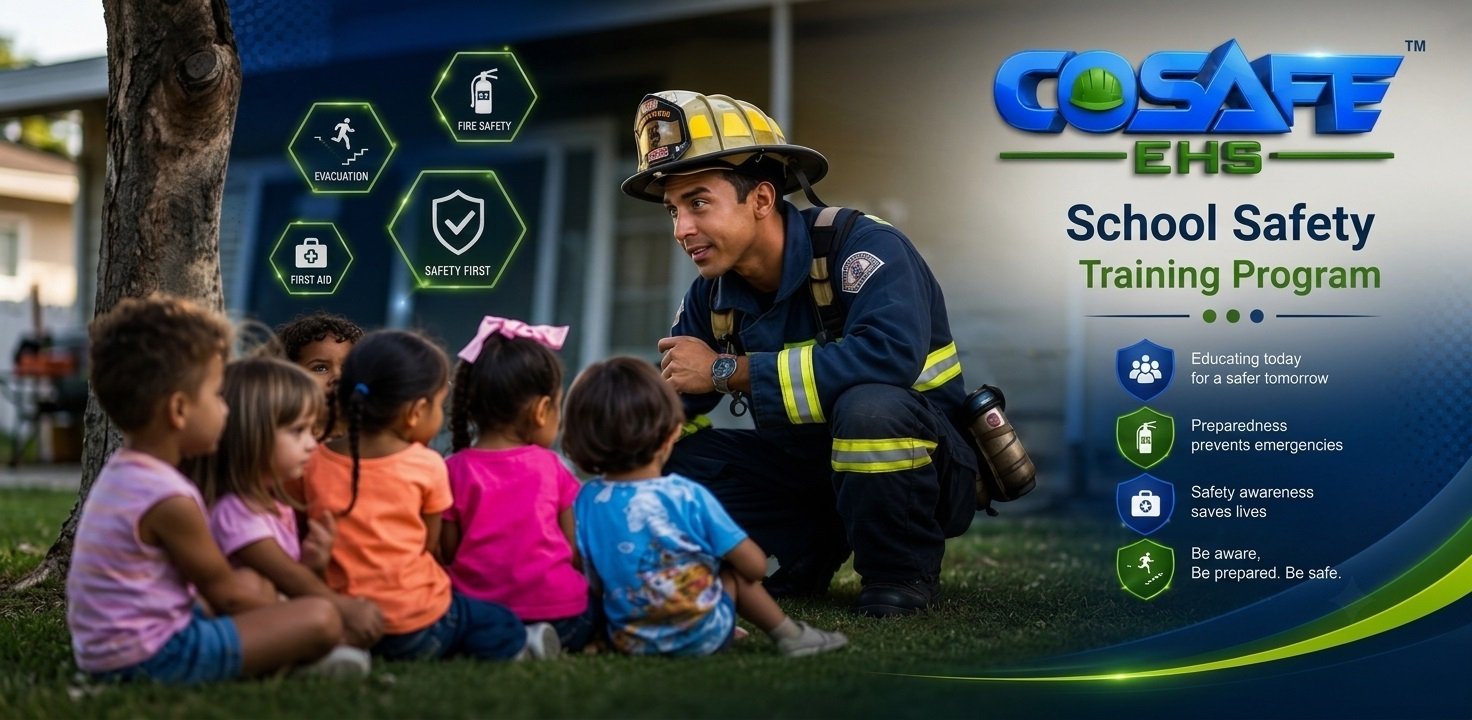
School Safety Training

Flexible Delivery Options

As per your organizational needs

On-SiteClassroomOnline

Practical & Scenario-Based

Real-life examples, live demonstrations and workplace scenarios

Certificate Provided

Issued to every participant after successful completion of the training

School Safety Training session

Overview

School Safety Training Program in Bangalore & Hyderabad

Professional School Safety Training Program by Cosafe EHS Bangalore & Hyderabad

Schools are entrusted with the responsibility of providing a safe, secure, and healthy learning environment for students, teachers, administrative staff, visitors, and support personnel. With increasing concerns related to fire emergencies, natural disasters, accidents, medical emergencies, transportation safety, violence prevention, laboratory hazards, and emergency preparedness, educational institutions must adopt a proactive approach toward safety management and risk reduction.

A comprehensive School Safety Training Program is essential for creating awareness, strengthening emergency preparedness, reducing risks, and ensuring that all stakeholders understand their roles and responsibilities during routine operations and emergency situations. Effective school safety programs not only protect lives but also ensure educational continuity, regulatory compliance, and a positive learning environment.
At Cosafe EHS Bangalore & Hyderabad, our School Safety Training Program is designed to equip school management, teachers, administrative staff, transport personnel, support staff, and students with the knowledge, skills, and confidence required to prevent incidents, respond effectively during emergencies, and foster a strong culture of safety across the institution.

Our training program aligns with global best practices in educational safety, emergency preparedness, disaster management, child protection, occupational health and safety, fire safety, and risk management. Through practical learning, interactive activities, emergency drills, and scenario-based exercises, participants gain hands-on experience in managing various school-related safety challenges.

What is School Safety Training?

School Safety Training is a structured educational program that prepares school stakeholders to identify hazards, assess risks, implement preventive measures, and respond effectively to emergencies that may occur within educational institutions.
The program focuses on:


  • Student safety and protection

  • Emergency preparedness and response

  • Fire safety awareness

  • Disaster management planning

  • Medical emergency response

  • Evacuation procedures

  • School transport safety

  • Child protection measures

  • Hazard identification and risk assessment

  • Safe learning environments

The objective is to create a resilient educational institution capable of protecting lives while maintaining uninterrupted educational activities.

Why School Safety Training is Important

Educational institutions face numerous safety risks that can affect students, staff, and visitors, including:

  • Fire emergencies

  • Earthquakes and natural disasters

  • Medical emergencies

  • School transportation accidents

  • Laboratory incidents

  • Electrical hazards

  • Playground injuries

  • Structural failures

  • Chemical spills

  • Security threats

Without proper training and preparedness, these incidents can result in injuries, panic, property damage, and disruption of educational activities.

School Safety Training helps institutions:

  • Reduce accidents and injuries

  • Improve emergency preparedness

  • Strengthen crisis response capabilities

  • Protect students and staff

  • Enhance safety awareness

  • Improve evacuation efficiency

  • Support regulatory compliance

  • Promote a culture of safety

  • Build stakeholder confidence

  • Ensure educational continuity

Objectives of School Safety Training

The primary objectives include:

  • Creating safety awareness among staff and students

  • Understanding school-specific hazards and risks

  • Developing emergency preparedness capabilities

  • Improving evacuation and emergency response skills

  • Strengthening fire safety awareness

  • Enhancing disaster management readiness

  • Promoting child safety and protection

  • Improving first aid response capabilities

  • Developing crisis management competencies

  • Establishing a proactive safety culture

Key Benefits of School Safety Training

Schools implementing structured safety programs benefit through:

  • Reduced accident rates

  • Enhanced student protection

  • Improved emergency response times

  • Better staff preparedness

  • Stronger disaster resilience

  • Improved regulatory compliance

  • Increased parent confidence

  • Better risk management practices

  • Reduced operational disruptions

  • Enhanced institutional reputation

Who Should Attend?

This training program is suitable for:

  • School Principals

  • School Administrators

  • Teachers

  • Non-Teaching Staff

  • School Safety Coordinators

  • Transport Coordinators

  • Laboratory Personnel

  • Security Personnel

  • Maintenance Teams

  • Hostel Wardens

  • School Nurses

  • Emergency Response Teams

Student awareness sessions can also be customized according to age groups and educational levels.

Enquire Now

Get a customized School Safety Training proposal for your organization.

Who Should Attend?

All Employees
Managers & Team Leaders
Safety Officers & HR Professionals
Emergency Response Teams
New Joinees
Leadership Teams

Training Modules

Our School Safety Training program is structured to provide clear understanding, practical insights and real-world examples for better awareness and compliance.

01 Fundamentals of school safety
02 Importance of safety culture
03 Roles and responsibilities
04 Risk-based safety management
05 School safety policies
06 Safety leadership in education
07 Classroom hazards
08 Playground risks
09 Laboratory hazards
10 Electrical hazards
11 Structural risks
12 Environmental hazards
13 Causes of school fires
14 Fire prevention measures
15 Fire classes and extinguishers
16 Fire alarm systems
17 Emergency reporting procedures
18 Initial firefighting response
19 Evacuation planning
20 Emergency exits
21 Assembly points
22 Roll call procedures
23 Evacuation leadership
24 Special needs evacuation considerations
25 Earthquake preparedness
26 Flood response
27 Cyclone safety
28 Severe weather response
29 Disaster recovery planning
30 Community emergency coordination
31 Basic first aid principles
32 CPR awareness
33 Bleeding control
34 Fracture management
35 Choking response
36 Medical emergency procedures
37 Child protection policies
38 Safe school environments
39 Abuse prevention awareness
40 Reporting mechanisms
41 Student supervision
42 Safeguarding practices
43 School bus safety
44 Driver responsibilities
45 Student transportation procedures
46 Emergency response during transit
47 Vehicle evacuation procedures
48 Road safety awareness
49 Chemical hazard identification
50 Safe chemical handling
51 Laboratory emergency procedures
52 Personal protective equipment (PPE)
53 Spill response
54 Waste management practices
55 Electrical hazard recognition
56 Safe equipment usage
57 Electrical emergency procedures
58 Inspection practices
59 Preventive maintenance awareness
60 Reporting unsafe conditions
61 Visitor management
62 Access control procedures
63 Threat identification
64 Suspicious activity reporting
65 Emergency lockdown procedures
66 Crisis communication
67 Emergency leadership
68 Incident command structures
69 Decision-making during crises
70 Resource management
71 Stakeholder communication
72 Recovery planning
73 Student mental health awareness
74 Stress management
75 Bullying prevention
76 Emotional support strategies
77 Positive learning environments
78 Psychological first aid awareness
79 Safety committee formation
80 School safety inspections
81 Audit procedures
82 Corrective actions
83 Continuous improvement
84 Safety reporting systems
85 Fire evacuation drills
86 Earthquake drills
87 Medical emergency simulations
88 Transport emergency exercises
89 Security incident scenarios
90 Disaster response exercises

Training Methodology

01
Expert-led presentations
02
Educational workshops
03
Safety awareness sessions
04
Interactive discussions
05
School-specific case studies
06
Question-and-answer sessions
07
School safety inspections
08
Hazard recognition activities
09
Risk assessment exercises
10
Safety observation techniques
11
Corrective action planning
12
School environment evaluations
13
Fire extinguisher operation
14
Emergency alarm systems
15
First aid techniques
16
Safe evacuation procedures
17
Emergency communication systems
18
Safety equipment usage
19
Classroom emergencies
20
Playground accidents
21
Fire incidents
22
Medical emergencies
23
Security threats
24
Natural disaster situations
25
Emergency planning workshops
26
Safety committee exercises
27
Communication activities
28
Team coordination exercises
29
Problem-solving challenges
30
Leadership development activities
31
Fire evacuation drills
32
Disaster preparedness drills
33
Medical response simulations
34
Security emergency exercises
35
School transport emergency drills
36
Incident command exercises
37
Knowledge assessments
38
Practical demonstrations
39
Group participation
40
Emergency response exercises
41
Scenario-based evaluations
42
Drill performance reviews
43
Experienced EHS and emergency preparedness professionals
44
School-specific safety training solutions
45
Practical and interactive training methodology
46
Comprehensive emergency preparedness programs
47
Customized training for educational institutions
48
Real-world case studies and simulations
49
Expert-led mock drills and emergency exercises
50
Focus on student and staff safety
51
Regulatory and compliance-oriented approach
52
Commitment to building safer learning environments

Industries We Serve

Our School Safety Training is relevant for organizations across all industries, including:

IT & ITES
Manufacturing
Healthcare
Education Institutions
Hospitality
Construction & Infrastructure
Logistics & Warehousing
Corporate Offices & All Other Sectors

Why Choose CoSafe EHS?

Experienced Trainers
Customized Training Programs
Practical & Interactive Approach
Flexible Delivery Modes
Industry-Focused Content

Frequently Asked Questions

View All FAQs
School Safety Training is a comprehensive safety program that equips school staff, teachers, administrators, support personnel, and students with the knowledge and practical skills to identify hazards, prevent accidents, respond to emergencies, and create a safe, secure, and resilient learning environment.
This training is ideal for school principals, administrators, teachers, non-teaching staff, school safety coordinators, transport coordinators, laboratory personnel, security staff, maintenance teams, hostel wardens, school nurses, emergency response teams, and student groups through age-appropriate awareness sessions.
The program covers school safety management, hazard identification and risk assessment, fire safety, emergency evacuation, disaster management, first aid, child protection, transport safety, laboratory safety, electrical safety, security awareness, crisis management, psychological safety, school safety audits, and practical emergency mock drills.
Yes. Cosafe EHS provides extensive practical training through fire extinguisher demonstrations, emergency evacuation drills, first aid practice, hazard identification exercises, school safety inspections, emergency communication activities, disaster response simulations, and realistic school emergency mock drills.
School Safety Training is suitable for primary schools, secondary schools, higher secondary schools, CBSE schools, ICSE schools, state board schools, international schools, residential schools, colleges, universities, coaching institutes, vocational training centers, and other educational institutions.
School Safety Training helps institutions reduce accidents, improve emergency preparedness, strengthen crisis response, protect students and staff, enhance regulatory compliance, improve evacuation efficiency, support business continuity, and create a strong culture of safety throughout the campus.
Yes. Cosafe EHS offers customized School Safety Training programs for schools, colleges, universities, educational campuses, hostels, and training institutions across Bangalore and Hyderabad. The training is tailored to the institution's infrastructure, operational risks, student age groups, and emergency preparedness requirements.
Yes. Participants who successfully complete the School Safety Training program, practical demonstrations, emergency response exercises, mock drills, and competency assessments receive a School Safety Training Certificate from Cosafe EHS.
The training includes fire evacuation drills, earthquake response exercises, first aid demonstrations, fire extinguisher practice, hazard identification activities, school safety inspections, laboratory safety demonstrations, transport emergency simulations, emergency communication exercises, and realistic incident management mock drills.
Cosafe EHS provides industry-leading School Safety Training delivered by experienced EHS and emergency preparedness professionals. The program features practical demonstrations, customized school safety solutions, emergency simulations, interactive learning, compliance-focused instruction, multilingual training, and hands-on exercises that help educational institutions build safer, more resilient, and emergency-ready campuses.

Let's Create a Safer and More
Compliant Workplace Together

Contact us today to get a customized School Safety Training proposal for your organization.