Chat with us 1
Practical Training Certified Trainers Safer Workplaces

Reach Truck Operator Training

Corporate Training in Bangalore, Hyderabad & Pan-India

Reach Truck Operator Training in Bangalore & HyderabadProfessional Reach Truck Operator Training by Cosafe EHS Bangalore & HyderabadReach Trucks are one of the most widely used material handling equipment (MHE) in modern warehouse...
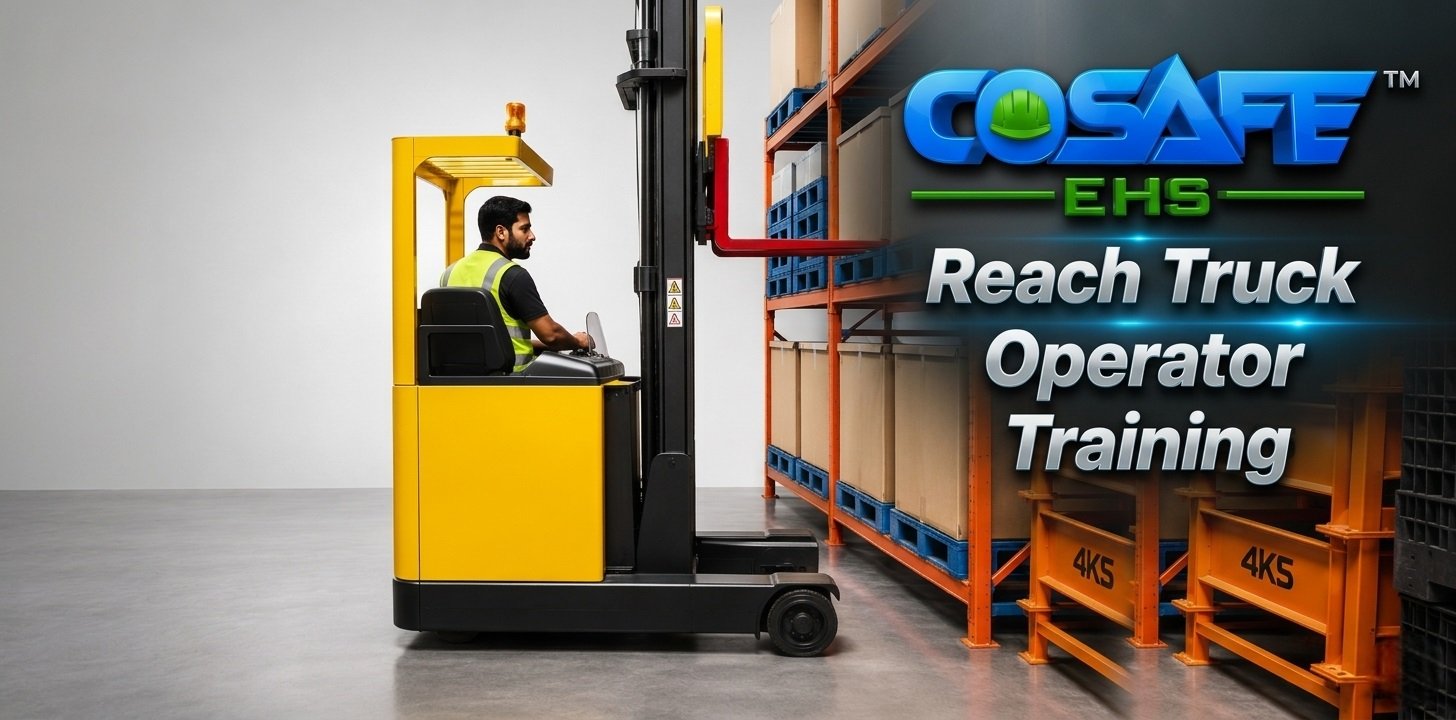
Reach Truck Operator Training

Flexible Delivery Options

As per your organizational needs

On-SiteClassroomOnline

Practical & Scenario-Based

Real-life examples, live demonstrations and workplace scenarios

Certificate Provided

Issued to every participant after successful completion of the training

Reach Truck Operator Training session

Overview

Reach Truck Operator Training in Bangalore & Hyderabad


Professional Reach Truck Operator Training by Cosafe EHS Bangalore & Hyderabad

Reach Trucks are one of the most widely used material handling equipment (MHE) in modern warehouses, logistics centers, distribution hubs, e-commerce fulfillment facilities, manufacturing plants, cold storage warehouses, retail distribution centers, and industrial storage facilities. Designed for operating in narrow aisles and handling high-rack storage systems, reach trucks significantly improve storage density, warehouse efficiency, and inventory management.

However, operating a reach truck requires specialized skills and safety awareness. Unlike conventional forklifts, reach trucks are designed to lift loads to greater heights while maneuvering in confined warehouse environments. Improper operation can lead to load instability, tip-over incidents, rack collisions, falling objects, pedestrian injuries, equipment damage, and costly operational disruptions.

At Cosafe EHS Bangalore & Hyderabad, our Reach Truck Operator Training Program is designed to equip operators with the technical knowledge, practical skills, and safety competencies required to safely operate reach trucks in demanding warehouse and industrial environments. The training focuses on equipment familiarization, stability principles, load handling techniques, warehouse traffic management, hazard identification, inspection procedures, and emergency response.

Our comprehensive training program combines classroom instruction, practical demonstrations, hands-on operating exercises, and competency assessments to ensure participants develop the confidence and expertise necessary to operate reach trucks safely and efficiently.

Why Reach Truck Operator Training is Important

Warehousing and logistics operations increasingly rely on high-density storage systems where reach trucks are used to lift and place loads at significant heights. Even a minor operator error can result in serious accidents, damaged inventory, equipment failure, or injuries.

Professional Reach Truck Operator Training helps organizations:

  • Reduce warehouse accidents and incidents

  • Improve operator competency and confidence

  • Prevent rack impact and structural damage

  • Minimize product loss and inventory damage

  • Improve warehouse productivity and efficiency

  • Strengthen workplace safety culture

  • Reduce equipment repair costs

  • Enhance operational reliability

  • Improve compliance with workplace safety requirements

  • Support safe material handling practices


Benefits of Reach Truck Operator Training

Organizations that invest in structured reach truck training benefit from:

  • Reduced material handling incidents

  • Improved warehouse safety performance

  • Better load control and positioning

  • Increased operator productivity

  • Enhanced equipment utilization

  • Lower maintenance and repair costs

  • Reduced downtime

  • Improved inventory protection

  • Better workforce competency

  • Stronger operational efficiency


Who Should Attend?

This training program is ideal for:

  • Reach Truck Operators

  • Warehouse Personnel

  • Logistics and Supply Chain Staff

  • Distribution Center Employees


Material Handling Equipment Operators

  • Inventory Management Teams

  • Storekeepers

  • Warehouse Supervisors

  • Operations Managers

  • Safety Officers

  • EHS Professionals

Industrial Workers involved in material handling

At Cosafe EHS Bangalore & Hyderabad, our training is tailored to address real-world warehouse challenges and operational requirements, ensuring participants gain practical and applicable skills.

Reach Trucks are essential for efficient warehouse and logistics operations, but safe operation requires specialized knowledge, technical skills, and a strong understanding of workplace hazards. Proper operator training significantly reduces risks while improving productivity and operational performance.

At Cosafe EHS Bangalore & Hyderabad, our Reach Truck Operator Training Program equips operators, supervisors, and warehouse personnel with the expertise needed to safely inspect, operate, maneuver, and manage reach truck equipment. Through comprehensive instruction, practical demonstrations, and real-world warehouse simulations, participants develop the competency required to improve safety, protect inventory, and maximize operational efficiency.

Operate Safely. Stack Efficiently. Protect Your Workforce. Choose Cosafe EHS for Professional Reach Truck Operator Training in Bangalore & Hyderabad.


Enquire Now

Get a customized Reach Truck Operator Training proposal for your organization.

Who Should Attend?

All Employees
Managers & Team Leaders
Safety Officers & HR Professionals
Emergency Response Teams
New Joinees
Leadership Teams

Training Modules

Our Reach Truck Operator Training program is structured to provide clear understanding, practical insights and real-world examples for better awareness and compliance.

01 What is a Reach Truck?
02 Types of reach trucks
03 Reach truck applications
04 Advantages in warehouse operations
05 Operator responsibilities
06 Safety expectations and workplace requirements
07 Mast assembly
08 Fork carriage systems
09 Reach mechanism
10 Hydraulic systems
11 Steering controls
12 Braking systems
13 Operator controls and displays
14 Safety devices and alarms
15 Pedestrian interaction hazards
16 Rack collision risks
17 Falling load hazards
18 Restricted visibility challenges
19 Surface condition risks
20 Equipment-related hazards
21 Environmental considerations
22 Risk control measures
23 Topics include:
24 Visual equipment inspection
25 Fork inspection
26 Mast and carriage checks
27 Hydraulic system inspection
28 Tire condition assessment
29 Battery inspection
30 Warning device checks
31 Defect reporting procedures
32 Center of gravity concepts
33 Stability triangle principles
34 Load center awareness
35 Effects of elevated loads
36 Dynamic stability factors
37 Turning hazards
38 Safe operating limits
39 Load assessment
40 Weight verification
41 Fork positioning
42 Safe lifting techniques
43 High-level stacking procedures
44 De-stacking operations
45 Load transportation methods
46 Safe load placement
47 Rack structure awareness
48 Safe load placement
49 Rack impact prevention
50 Overloading risks
51 High-level storage considerations
52 Warehouse aisle management
53 Narrow aisle maneuvering
54 Turning techniques
55 Speed management
56 Visibility considerations
57 Obstruction avoidance
58 Safe travel procedures
59 Pedestrian awareness
60 Traffic flow management
61 Designated travel routes
62 Blind corner procedures
63 Horn and warning device usage
64 Communication with ground personnel
65 Battery hazards
66 Charging procedures
67 Electrical safety awareness
68 Battery maintenance basics
69 Charging station safety
70 Emergency response considerations
71 Startup procedures
72 Travel with loads
73 Operating on ramps and slopes
74 Speed control
75 Safe parking procedures
76 Shutdown techniques
77 Preventing unsafe shortcuts
78 Equipment malfunction response
79 Load instability incidents
80 Battery emergencies
81 Collision response
82 Emergency shutdown procedures
83 Incident reporting requirements
84 Preventive maintenance awareness
85 Identifying mechanical issues
86 Reporting defects
87 Equipment care practices
88 Operational checks
89 Housekeeping responsibilities
90 Operator responsibilities
91 Workplace safety policies
92 Inspection records
93 Documentation requirements
94 Incident reporting procedures
95 Safety accountability
96 Equipment familiarization
97 Pre-use inspections
98 Load handling exercises
99 Stacking and de-stacking practice
100 Narrow aisle maneuvering
101 Parking exercises
102 Emergency response simulations

Training Methodology

01
Multimedia presentations
02
Industry case studies
03
Warehouse incident analyses
04
Safety discussions
05
Equipment operation reviews
06
Best-practice guidance
07
Reach truck controls
08
Equipment inspections
09
Safe lifting techniques
10
Stacking procedures
11
Load positioning methods
12
Parking and shutdown practices
13
Rack impact prevention scenarios
14
Pedestrian interaction challenges
15
Load instability situations
16
Warehouse traffic management exercises
17
Hazard recognition activities
18
Emergency response simulations
19
Equipment startup procedures
20
Safe maneuvering techniques
21
High-level stacking operations
22
Narrow aisle navigation
23
Load transportation
24
Parking and shutdown procedures
25
Risk assessment workshops
26
Safety observation exercises
27
Incident analysis discussions
28
Warehouse safety planning activities
29
Communication exercises
30
Written examinations
31
Practical operation assessments
32
Hazard identification exercises
33
Equipment inspection evaluations
34
Scenario-based performance reviews
35
Instructor observations
36
Experienced material handling equipment trainers
37
Practical, hands-on learning methodology
38
Industry-specific warehouse safety modules
39
Real-world operational simulations
40
Competency-based operator assessments
41
Customized corporate training programs
42
On-site and classroom delivery options
43
Strong focus on accident prevention
44
Compliance-oriented training framework
45
Post-training support and guidance

Program Details

Duration

Half Day (3–4 Hours) / Full Day (5–6 Hours)

Certification

Certificate will be provided after successful completion

Validity

1–2 Years

Languages

Kannada / Hindi / English / Telugu

Reach Truck Operator Training program
Customizable for your organization

Industries We Serve

Our Reach Truck Operator Training is relevant for organizations across all industries, including:

IT & ITES
Manufacturing
Healthcare
Education Institutions
Hospitality
Construction & Infrastructure
Logistics & Warehousing
Corporate Offices & All Other Sectors

Why Choose CoSafe EHS?

Experienced Trainers
Customized Training Programs
Practical & Interactive Approach
Flexible Delivery Modes
Industry-Focused Content

Frequently Asked Questions

View All FAQs
Reach Truck Operator Training is a professional safety program that teaches operators how to safely inspect, operate, maneuver, stack, and transport materials using reach trucks in warehouses, logistics centers, and industrial storage facilities.
This training is ideal for reach truck operators, warehouse personnel, logistics and supply chain staff, distribution center employees, inventory teams, warehouse supervisors, safety officers, EHS professionals, and industrial workers involved in material handling.
The course covers equipment components, hazard identification, pre-operational inspections, stability principles, load handling, warehouse racking safety, narrow aisle operations, traffic management, battery safety, emergency response, legal compliance, and hands-on practical training.
Proper training helps reduce warehouse accidents, improve operator competency, prevent rack damage, protect inventory, enhance workplace safety, improve productivity, and ensure safe material handling practices.
Yes. The program includes classroom learning, live demonstrations, hands-on operating exercises, warehouse simulations, equipment inspections, load handling practice, and competency assessments.
Yes. The training includes warehouse traffic management, pedestrian awareness, designated travel routes, blind corner procedures, warning device usage, and safe communication with ground personnel.
Yes. Participants learn how to perform visual inspections, inspect forks, mast assemblies, hydraulic systems, tires, batteries, warning devices, and report equipment defects before operation.
Organizations benefit from fewer material handling incidents, improved warehouse safety, better load control, increased productivity, reduced maintenance costs, lower downtime, improved inventory protection, and stronger operational efficiency.
Cosafe EHS delivers the program through interactive classroom sessions, practical demonstrations, scenario-based learning, hands-on operator training, group activities, and competency-based assessments conducted by experienced trainers.
Yes. Participants who successfully complete the written examinations, practical assessments, hazard identification exercises, equipment inspections, and performance evaluations receive a course completion certificate.

Let's Create a Safer and More
Compliant Workplace Together

Contact us today to get a customized Reach Truck Operator Training proposal for your organization.