Cosafe EHS Bangalore Service

Food Safety Audit Services

Introduction to Food Safety Audit Services Bangalore

Overview of Food Safety Audit

A Food Safety Audit is a systematic, independent, and documented evaluation of food handling, processing, storage, hygiene practices, and compliance with food safety standards to ensure that food products are safe for consumption. It helps organizations identify contamination risks, compliance gaps, and operational inefficiencies across the entire food chain.

At CoSafe EHS, our Food Safety Audit Services are designed to help food businesses maintain the highest levels of hygiene, regulatory compliance, and operational excellence. We provide in-depth inspections aligned with national and international food safety standards, ensuring your organization minimizes risks and builds consumer trust.

Why Choose CoSafe EHS for Food Safety Audit?

CoSafe EHS delivers result-driven Food Safety Audit Services that help organizations ensure compliance, enhance hygiene standards, reduce risks, and build long-term consumer trust. Our audits are practical, compliance-focused, and tailored to meet industry-specific food safety requirements, making your business safer, compliant, and future-ready.
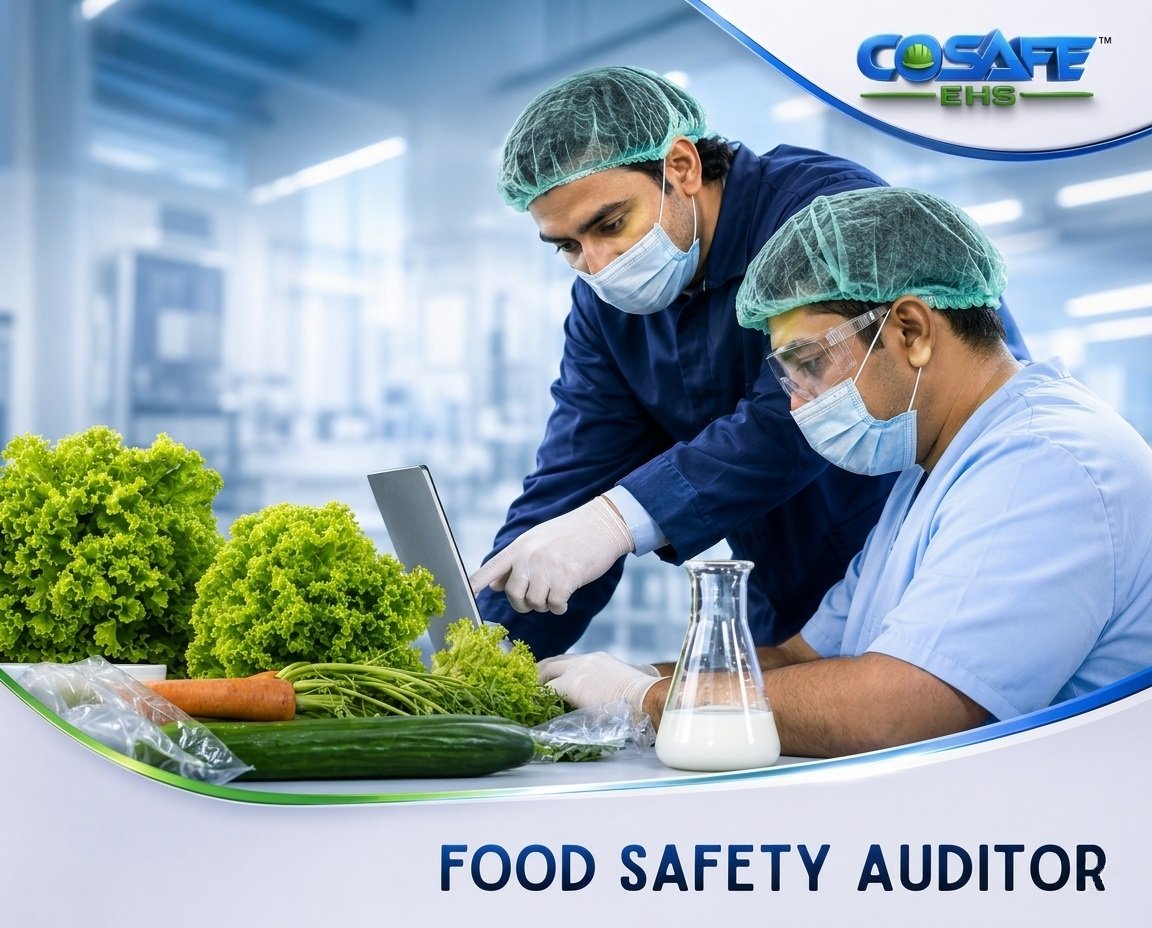
Ensures compliance with food safety regulations and standards
Prevents food contamination and foodborne illnesses
Enhances brand reputation and customer trust
Improves hygiene and sanitation practices
Identifies operational gaps and process inefficiencies
Reduces product recalls and legal risks
Strengthens quality control systems
Improves employee awareness and food safety culture
Supports certification readiness (ISO, HACCP, FSSAI)
Increases overall operational efficiency and profitability
Food Safety Audit Services
Our Inspection Includes

Cosafe EHS Food Safety Audit Checks

  • Inspection of food handling and processing areas for hygiene compliance
  • Verification of raw material storage conditions and segregation practices
  • Assessment of temperature control systems for perishable food items
  • Inspection of food preparation processes and cross-contamination risks
  • Evaluation of cleaning and sanitation procedures (CIP/SIP systems)
  • Personal hygiene compliance checks of food handlers and staff
  • Pest control system inspection and effectiveness evaluation
  • Verification of waste management and disposal practices
  • Inspection of equipment cleanliness and maintenance records
  • Assessment of water quality used in food processing
  • Review of food safety documentation and record-keeping systems
  • Verification of labeling, packaging, and traceability systems
  • Allergen management and cross-contact prevention checks
  • Inspection of cold storage, refrigeration, and freezer conditions
  • Assessment of transportation and food distribution practices
  • Review of supplier quality assurance and approval processes
  • Emergency preparedness and food recall procedure evaluation
  • Compliance check with food safety standards and regulations
  • Evaluation of training programs for food safety awareness
  • Final audit report submission with compliance status and recommendations

Talk to Our Safety Experts

Get expert guidance on workplace safety, fire protection, compliance, and training solutions tailored to your business needs.

Get Consultancy Now
HOW WE HELP

Our Services

Comprehensive consultancy solutions tailored to your business safety needs.

01

Choose CoSafe EHS Food Safety Audit Services

Comprehensive food safety audits ensuring hygiene, compliance, and risk-free food operations.

  • Certified food safety auditors
  • Industry-specific audit approach
  • Detailed compliance evaluation
  • Actionable recommendations
  • End-to-end audit support
  • PAN India service availability
  • Documentation and certification support
  • Risk-based audit methodology
02

Food Safety Audit Importance

Food safety audits protect consumers and businesses by identifying risks before they become critical issues.

  • Prevent food contamination
  • Ensure consumer safety
  • Maintain regulatory compliance
  • Avoid penalties and legal actions
  • Improve product quality
  • Build brand trust
  • Reduce operational risks
  • Enhance business sustainability
03

Legal Framework Covered

Audits aligned with national and international food safety regulations and best practices.

  • FSSAI Guidelines
  • ISO 22000 Food Safety Management System
  • HACCP (Hazard Analysis Critical Control Point)
  • GMP (Good Manufacturing Practices)
  • GHP (Good Hygiene Practices)
  • Food Safety and Standards Act
  • Codex Alimentarius Guidelines
  • Internal Quality & Safety Policies
04

Eligible Companies

Suitable for all businesses involved in food production, handling, and distribution.

  • Food Manufacturing Units
  • Restaurants & Hotels
  • Cloud Kitchens
  • Catering Services
  • Food Processing Industries
  • Dairy & Beverage Industries
  • Retail Food Chains
  • Cold Storage Facilities
  • E-commerce Food Businesses
  • Packaging & Distribution Units
05

Food Safety Audit Checks

Thorough inspection of hygiene, processes, compliance, and risk management systems.

  • Hygiene and sanitation inspection
  • Temperature and storage checks
  • Equipment cleanliness verification
  • Pest control assessment
  • Documentation review
  • Allergen control checks
  • Staff hygiene compliance
  • Waste management evaluation
  • Food handling practices review
  • Traceability and labeling verification
06

Audit Methodology

A structured and systematic approach to ensure complete food safety compliance.

  • Pre-audit planning and scope definition
  • Documentation and policy review
  • On-site inspection and evaluation
  • Process and hygiene assessment
  • Risk identification and analysis
  • Compliance gap assessment
  • Corrective action planning
  • Detailed audit report preparation
  • Management briefing and consultation
  • Post-audit support and re-evaluation
WE ALWAYS HELP

Frequently Asked Questions

A Food Safety Audit is a systematic inspection of food handling, processing, storage, and hygiene practices to ensure compliance with food safety standards and regulations.
It helps prevent food contamination, ensures consumer safety, reduces legal risks, and enhances brand reputation.
All food-related businesses including manufacturers, restaurants, cloud kitchens, catering services, and food distributors require regular audits.
Typically, audits should be conducted annually, with internal checks performed more frequently (monthly or quarterly) based on risk levels.
Audits are conducted based on FSSAI guidelines, ISO 22000, HACCP, GMP, and GHP standards.
Common issues include poor hygiene, improper storage temperatures, cross-contamination, pest infestations, and inadequate documentation.
No, audits are planned to minimize disruption and are often conducted alongside normal operations.
Documents such as SOPs, hygiene records, temperature logs, pest control reports, training records, and supplier approvals are reviewed.
A detailed report is provided with non-conformities, risk levels, and corrective action recommendations to improve compliance.
It improves food quality, ensures regulatory compliance, reduces risks of foodborne illness, builds customer trust, and supports certification readiness.

Send An Enquiry

Fill in the form and our team will respond within 24 hours.