






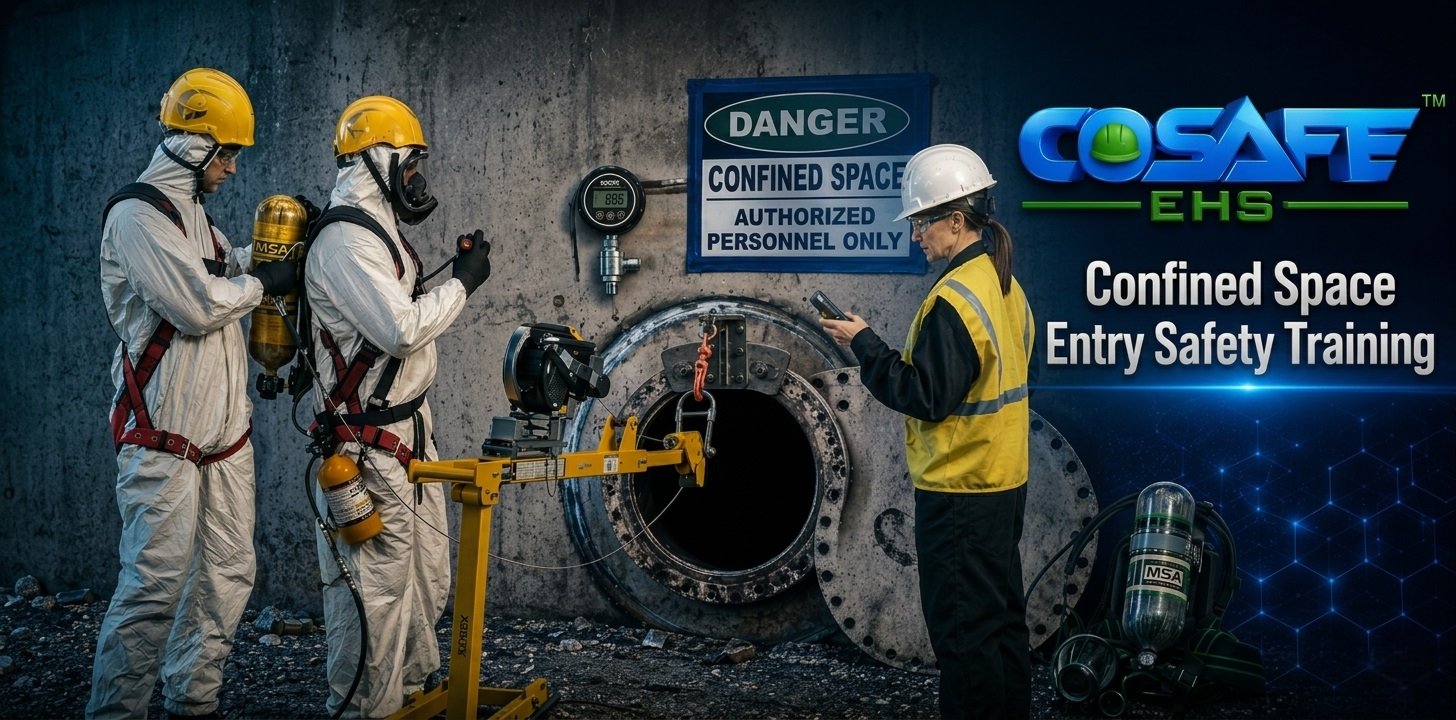
Overview
Confined Space Entry Safety Training in Bangalore
Confined spaces are among the most hazardous work environments found in industries such as manufacturing, oil & gas, petrochemicals, pharmaceuticals, power plants, wastewater treatment facilities, food processing units, construction projects, mining operations, and industrial maintenance activities. Tanks, vessels, silos, storage bins, pipelines, sewers, underground chambers, manholes, boilers, ductwork, pits, vaults, and process equipment are all examples of confined spaces that can present serious risks to workers.
Every year, workplace incidents in confined spaces result in severe injuries, fatalities, equipment damage, production losses, environmental impacts, and legal consequences. Many of these incidents occur because workers enter confined spaces without proper hazard assessment, atmospheric testing, ventilation, permit systems, rescue planning, or adequate training. Studies of confined space accidents consistently show that a large percentage of fatalities involve rescuers who attempted emergency rescue without proper equipment or procedures.
At Cosafe EHS Bangalore, our Confined Space Entry Safety Training program is designed to equip employees, supervisors, permit issuers, safety professionals, maintenance personnel, contractors, and emergency responders with the knowledge, practical skills, and hazard awareness required to safely enter, work in, monitor, and rescue personnel from confined spaces.
This comprehensive training program focuses on hazard identification, atmospheric monitoring, permit-to-work systems, ventilation requirements, isolation procedures, emergency preparedness, rescue planning, legal compliance, and safe work practices. Participants gain both theoretical understanding and practical competency to perform confined space operations safely and effectively.
Why Confined Space Safety Training is Important
Confined spaces often contain hazards that may not be immediately visible. Workers can be exposed to:
Oxygen-deficient atmospheres
Toxic gases and vapors
Flammable or explosive atmospheres
Engulfment hazards
Mechanical and electrical hazards
Heat stress and poor ventilation
Restricted access and limited escape routes
Falling objects and structural hazards
Chemical exposure risks
Biological contaminants
Without proper training and preparation, these hazards can rapidly become life-threatening.
Benefits of Confined Space Entry Safety Training
Organizations that invest in structured Confined Space Entry Safety Training experience significant operational and safety benefits:
Reduction in confined space incidents and fatalities
Improved worker competency and hazard awareness
Enhanced emergency preparedness
Better compliance with workplace safety regulations
Stronger permit-to-work implementation
Improved contractor safety management
Reduced operational downtime
Increased workforce confidence and accountability
Better rescue readiness
Stronger organizational safety culture
Who Should Attend?
This training program is ideal for:
Maintenance technicians
Plant operators
Industrial workers
Mechanical and electrical personnel
Shutdown and turnaround teams
Construction workers
Contractors and subcontractors
Supervisors and managers
Safety officers and EHS professionals
Permit issuers and permit receivers
Emergency response teams
Rescue personnel
At Cosafe EHS Bangalore, our training methodology combines industrial best practices, practical demonstrations, real-world case studies, hands-on exercises, and scenario-based learning to ensure participants are prepared for actual confined space operations.
Confined spaces present some of the most serious hazards in industrial environments. Without proper training, planning, monitoring, and emergency preparedness, confined space work can result in catastrophic consequences. A well-trained workforce is the foundation of safe confined space operations.
At Cosafe EHS Bangalore, our Confined Space Entry Safety Training Program equips employees, supervisors, contractors, and safety professionals with the knowledge, skills, and practical competencies required to identify hazards, implement control measures, safely enter confined spaces, and respond effectively to emergencies.
By investing in professional Confined Space Entry Safety Training, organizations strengthen compliance, improve workforce competency, reduce workplace incidents, and create a safer working environment for everyone involved.
Identify Hazards. Control Risks. Ensure Safe Entry. Choose Cosafe EHS Bangalore for Professional Confined Space Entry Safety Training.
Training Modules
Module 1: Introduction to Confined Space Safety
Participants gain a fundamental understanding of confined space hazards and safety requirements.
Topics include:
- Definition of confined spaces
- Characteristics of confined spaces
- Types of confined spaces
- Regulatory requirements
- Industry-specific confined space examples
- Responsibilities of workers and employers
Module 2: Hazard Identification and Risk Assessment
Understanding hazards is the foundation of safe confined space operations.
Topics include:
- Hazard recognition techniques
- Physical hazards
- Atmospheric hazards
- Chemical hazards
- Biological hazards
- Mechanical hazards
- Electrical hazards
- Risk assessment methodologies
- Hierarchy of controls
Participants learn how to evaluate and mitigate confined space risks before entry.
Module 3: Atmospheric Hazards and Gas Monitoring
Atmospheric conditions are one of the leading causes of confined space fatalities.
Training includes:
- Oxygen deficiency hazards
- Oxygen enrichment hazards
- Toxic gas identification
- Flammable gas hazards
- Explosive atmosphere awareness
- Gas detector operation
- Atmospheric testing procedures
- Continuous monitoring requirements
- Calibration awareness
Participants gain practical understanding of atmospheric testing and monitoring procedures.
Module 4: Permit to Work (PTW) System
A Permit to Work system ensures controlled and authorized entry into confined spaces.
Topics include:
- Purpose of PTW systems
- Entry permit requirements
- Permit authorization process
- Hazard documentation
- Control measures
- Permit suspension and cancellation
- Roles and responsibilities
Participants learn how permit systems prevent unauthorized and unsafe entries.
Module 5: Isolation and Lockout Tagout (LOTO)
Before entering a confined space, hazardous energy sources must be controlled.
Topics include:
- Energy isolation requirements
- Lockout Tagout principles
- Mechanical isolation
- Electrical isolation
- Hydraulic and pneumatic isolation
- Process isolation
- Verification of isolation
Participants learn how proper isolation prevents serious injuries.
Module 6: Ventilation and Atmospheric Control
Ventilation plays a critical role in maintaining safe working conditions.
Training includes:
- Natural ventilation
- Mechanical ventilation
- Air movement principles
- Hazard removal techniques
- Ventilation equipment usage
- Maintaining acceptable atmospheric conditions
Participants learn methods for improving confined space air quality.
Module 7: Roles and Responsibilities in Confined Space Entry
Safe confined space operations require clearly defined responsibilities.
Topics include:
Authorized Entrants
- Entry requirements
- Hazard awareness
- Communication responsibilities
- Self-monitoring practices
Attendants
- Monitoring entrants
- Communication procedures
- Emergency response responsibilities
- Entry control duties
Entry Supervisors
- Permit authorization
- Hazard verification
- Safety monitoring
- Work suspension authority
Module 8: Personal Protective Equipment (PPE)
Proper PPE provides critical protection during confined space work.
Topics include:
- Head protection
- Eye and face protection
- Respiratory protection
- Protective clothing
- Hand protection
- Foot protection
- PPE inspection and maintenance
Participants learn how to select and use PPE appropriately.
Module 9: Respiratory Protection and Breathing Apparatus
Confined spaces may require specialized respiratory protection.
Topics include:
- Air-purifying respirators
- Supplied-air respirators
- Self-Contained Breathing Apparatus (SCBA)
- Breathing apparatus awareness
- Fit testing principles
- Respiratory protection limitations
Participants gain awareness of respiratory safety requirements.
Module 10: Communication Systems and Entry Monitoring
Effective communication is critical during confined space operations.
Training includes:
- Communication equipment
- Verbal and non-verbal communication methods
- Emergency communication procedures
- Continuous entrant monitoring
- Attendant communication responsibilities
Participants learn techniques to maintain safe communication throughout entry operations.
Module 11: Emergency Preparedness and Rescue Planning
Rescue planning must be completed before confined space entry begins.
Topics include:
- Rescue plan development
- Rescue team responsibilities
- Emergency procedures
- Retrieval systems
- Rescue equipment
- Incident response coordination
Participants understand the importance of pre-planned rescue operations.
Module 12: Confined Space Rescue Awareness
Many confined space fatalities involve untrained rescuers.
Training includes:
- Non-entry rescue concepts
- Rescue equipment awareness
- Retrieval devices
- Rescue communication
- Rescue risk assessment
- Coordination with emergency responders
Participants learn how rescue operations should be planned and executed safely.
Module 13: Fire, Explosion and Chemical Safety
Confined spaces may contain flammable substances or hazardous chemicals.
Topics include:
- Fire triangle principles
- Explosion hazards
- Chemical exposure risks
- Ignition source control
- Hot work considerations
- Emergency response measures
Participants gain awareness of fire and chemical safety precautions.
Module 14: Incident Investigation and Lessons Learned
Learning from past incidents improves future safety performance.
Topics include:
- Root cause analysis
- Incident reporting
- Near miss reporting
- Corrective actions
- Preventive actions
- Case study analysis
Participants learn how organizations can prevent repeat incidents.
Module 15: Practical Demonstrations and Mock Drills
Practical exercises reinforce theoretical learning.
Activities include:
- Gas detector demonstrations
- Permit completion exercises
- Hazard identification workshops
- PPE inspection activities
- Entry monitoring simulations
- Rescue equipment demonstrations
- Emergency response drills
- Confined space scenario exercises
Participants gain confidence through practical application.
Training Methodology
At Cosafe EHS Bangalore, we believe that effective confined space training must go beyond classroom instruction. Our methodology combines theory, practical application, simulations, and competency assessment to ensure participants are prepared for real-world confined space operations.
Interactive Classroom Sessions
Participants receive instructor-led training through:
- Multimedia presentations
- Industry-specific examples
- Accident case studies
- Group discussions
- Hazard awareness workshops
- Regulatory compliance guidance
This approach builds strong foundational knowledge.
Practical Demonstrations
Our trainers conduct hands-on demonstrations covering:
- Gas detection equipment
- Atmospheric monitoring procedures
- Permit-to-work systems
- Isolation and LOTO techniques
- PPE inspection and use
- Rescue equipment awareness
Participants gain practical familiarity with essential safety equipment.
Scenario-Based Learning
Realistic workplace scenarios help participants understand operational challenges.
Exercises include:
- Hazard identification exercises
- Permit review activities
- Emergency response simulations
- Atmospheric hazard scenarios
- Decision-making exercises
- Communication drills
This method improves critical thinking and hazard recognition.
Group Activities and Workshops
Participants engage in:
- Team risk assessments
- Safety planning exercises
- Incident investigation workshops
- Rescue planning activities
- Communication exercises
- Behavioral safety discussions
These activities improve teamwork and operational coordination.
Mock Drills and Emergency Simulations
Emergency preparedness is reinforced through practical drills.
Activities include:
- Confined space entry simulations
- Emergency evacuation exercises
- Rescue awareness drills
- Attendant response scenarios
- Communication exercises
- Incident management simulations
These drills build confidence and emergency readiness.
Assessment and Competency Evaluation
Participants are evaluated through:
- Written assessments
- Practical demonstrations
- Hazard identification exercises
- Scenario-based evaluations
- Interactive questioning
- Participation reviews
Certificates are awarded upon successful completion of the training program.
Why Choose Cosafe EHS Bangalore for Confined Space Entry Safety Training?
- Experienced industrial safety trainers
- Industry-specific training modules
- Practical and hands-on learning approach
- Realistic confined space simulations
- Comprehensive emergency preparedness focus
- Customized corporate training solutions
- On-site and classroom training options
- Strong emphasis on legal compliance and operational safety
- Interactive and engaging training methodology
- Post-training support and guidance
Program Details
Duration: Half Day (3–4 Hours) / Full Day (5–6 Hours)
Certification: Certificate will be provided after successful completion
Validity: 1–2 Years
Languages: Kannada / Hindi / English / Telugu