






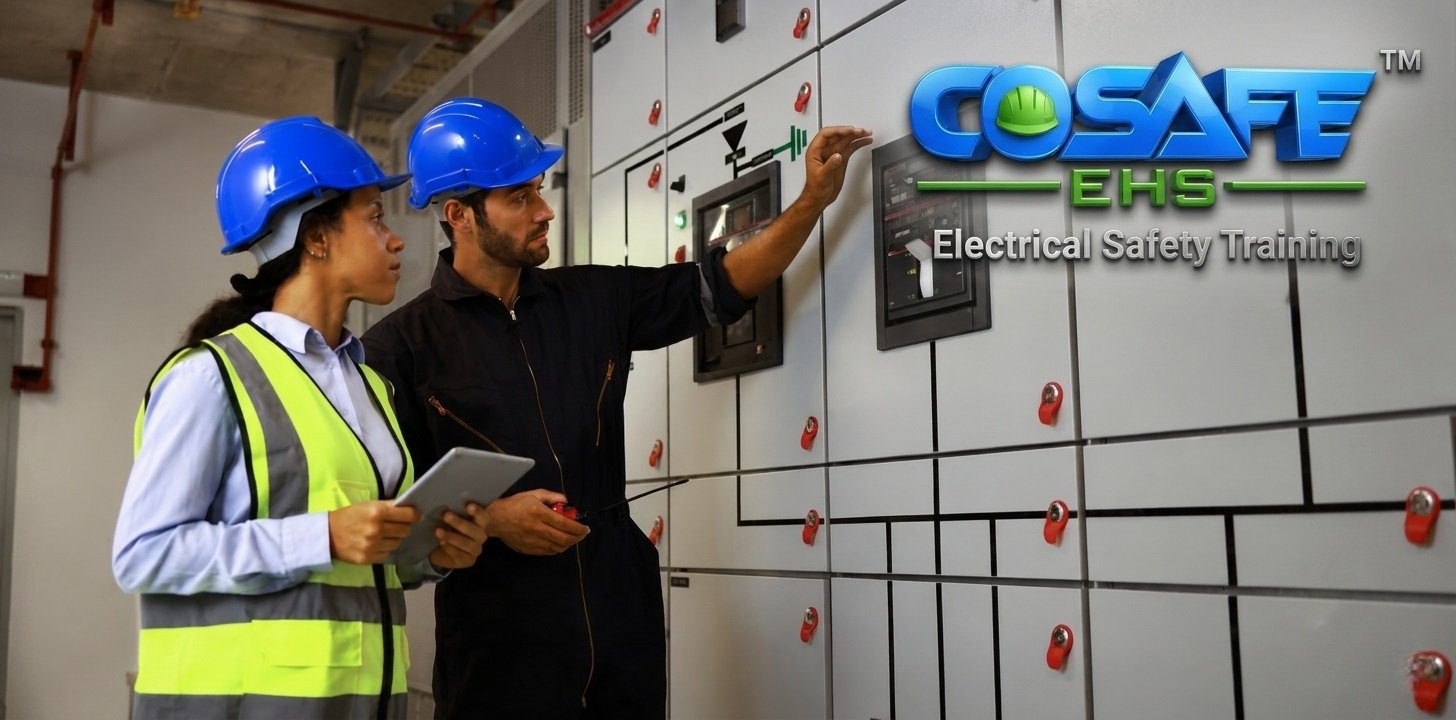
Overview
Electrical Safety Training Course in Bangalore
Electrical hazards are among the leading causes of workplace accidents, fires, arc flash incidents, equipment damage, electrocution, operational downtime, and industrial fatalities across industries. Unsafe electrical practices, poor maintenance, overloaded circuits, exposed wiring, improper grounding, unauthorized repairs, and lack of electrical safety awareness can create severe risks for employees, contractors, equipment, and business operations.
At Cosafe EHS Bangalore, we provide comprehensive and industry-focused Electrical Safety Training programs designed to equip employees, electricians, maintenance personnel, supervisors, engineers, EHS professionals, and industrial workers with practical electrical safety knowledge, hazard identification skills, safe work practices, and emergency response techniques required to prevent electrical accidents and maintain safe workplaces.
Our Electrical Safety Training programs combine theoretical learning with practical demonstrations, real-world industrial case studies, hazard analysis, electrical risk assessment, lockout/tagout (LOTO) awareness, emergency response training, and hands-on safety exercises. The program is designed to improve workplace electrical safety culture, strengthen compliance performance, reduce accident risks, and enhance operational reliability.
Electrical safety has become a critical component of occupational health and safety management systems across industries including manufacturing, construction, oil & gas, power plants, warehouses, facility management, and commercial operations. Industry safety discussions consistently emphasize that effective electrical safety training should include hazard awareness, PPE usage, energized work precautions, isolation procedures, and arc flash risk management.
At Cosafe EHS Bangalore, we focus on practical learning and real-world applications to ensure participants understand not only the theory of electrical safety but also the correct procedures required to safely work around electrical systems and energized equipment. Our training programs are customized according to industry type, operational hazards, voltage exposure levels, and workplace risk profiles.
Cosafe EHS Electrical Safety Training programs are ideal for:
Manufacturing industries
Construction & infrastructure companies
Electrical maintenance teams
Power generation and utility sectors
Warehouses & logistics facilities
Facility management companies
Oil & gas industries
Commercial buildings & IT parks
Hospitals & healthcare facilities
Industrial plants and process industries
Engineering & maintenance contractors
EHS and safety professionals
Organizations that invest in structured Electrical Safety Training significantly reduce workplace incidents, improve compliance with electrical safety standards, minimize equipment failures, reduce operational downtime, and create safer working environments.
Electrical hazards can cause serious injuries, fires, operational disruptions, and financial losses if not properly controlled. Organizations that invest in Electrical Safety Training improve hazard awareness, strengthen safe work practices, reduce workplace incidents, and create safer operational environments.
At Cosafe EHS Bangalore, our Electrical Safety Training programs empower organizations and employees with practical safety knowledge, hazard control techniques, emergency response capability, and operational awareness required to prevent electrical accidents and maintain safe workplaces.
Control Electrical Hazards. Prevent Accidents. Build Safer Workplaces with Cosafe EHS Bangalore.
Training Modules
1. Introduction to Electrical Safety
This foundational module introduces participants to workplace electrical hazards, safety principles, and accident prevention strategies.
Topics covered include:
Importance of electrical safety in workplaces
Common causes of electrical accidents
Effects of electricity on the human body
Understanding electrical hazards and risks
Electrical safety responsibilities
Consequences of unsafe electrical practices
Participants gain awareness of how electrical incidents occur and how proper safety measures prevent accidents.
2. Fundamentals of Electricity
Understanding basic electrical principles is essential for safe work practices.
This module includes:
Basics of voltage, current, resistance, and power
AC and DC electrical systems
Conductors and insulators
Electrical circuits and components
Electrical load awareness
Grounding and earthing fundamentals
Participants develop a clear understanding of electrical systems and operational hazards.
3. Electrical Hazard Identification & Risk Assessment
Hazard identification is critical for preventing electrical incidents.
Training includes:
Identifying electrical hazards in workplaces
Exposed conductors and damaged equipment
Overloading and short-circuit risks
Wet environment electrical hazards
Unsafe electrical installations
Electrical risk assessment techniques
Participants learn proactive methods to identify and control workplace electrical risks.
4. Safe Electrical Work Practices
This module focuses on safe work procedures around electrical systems and equipment.
Topics covered:
Electrical safety rules and precautions
Safe use of electrical tools and equipment
Inspection before electrical work
Isolation and de-energization procedures
Working near energized systems
Housekeeping around electrical equipment
Participants learn how proper work practices reduce accident risks and improve workplace safety.
5. Lockout/Tagout (LOTO) Procedures
Improper isolation of electrical energy is a major cause of workplace accidents.
Training includes:
Principles of hazardous energy control
Lockout/Tagout procedures
Electrical isolation techniques
Verification of zero energy state
Authorized and affected personnel responsibilities
Group lockout awareness
This module strengthens workplace control measures during maintenance and repair activities.
6. Arc Flash & Arc Blast Awareness
Arc flash incidents can result in severe burns, explosions, and fatalities.
Participants are trained in:
Understanding arc flash hazards
Causes of arc flash incidents
Arc flash boundary awareness
PPE requirements for electrical work
Safe approach distances
Emergency response during arc flash incidents
Safety professionals consistently highlight arc flash awareness and proper PPE usage as critical components of electrical safety programs.
7. Electrical PPE & Safety Equipment
Proper personal protective equipment is essential for electrical work safety.
Topics include:
Electrical PPE selection and usage
Insulated gloves and tools awareness
Safety shoes and protective clothing
Face shields and arc-rated PPE
Voltage detectors and testing equipment
Inspection and maintenance of PPE
Participants learn how proper safety equipment minimizes exposure risks.
8. Electrical Fire Safety
Electrical faults are one of the leading causes of workplace fires.
Training includes:
Causes of electrical fires
Overheating and overloaded circuits
Safe handling of electrical panels
Fire prevention measures
Electrical fire emergency response
Correct use of fire extinguishers for electrical fires
Hands-on demonstrations improve emergency response preparedness during electrical fire incidents.
9. Working Safely with Electrical Panels & Equipment
Industrial workplaces involve constant interaction with energized equipment and control systems.
Participants learn:
Electrical panel safety precautions
Safe switching procedures
Circuit breaker awareness
Transformer and generator safety basics
Safe operation of electrical equipment
Preventive maintenance awareness
This module is especially valuable for electricians, maintenance teams, and industrial operators.
10. Emergency Response & First Aid for Electrical Incidents
Quick response during electrical emergencies can save lives.
Training includes:
Responding to electric shock incidents
Emergency isolation procedures
Rescue techniques for electrical accidents
CPR and first aid awareness
Burn injury management
Coordination with emergency responders
Participants gain practical emergency response knowledge for handling electrical accidents safely.
11. Electrical Inspection & Preventive Maintenance Awareness
Regular inspections help reduce equipment failures and electrical hazards.
Topics covered:
Electrical inspection procedures
Identifying unsafe wiring conditions
Preventive maintenance practices
Thermal overheating awareness
Cable management and routing safety
Electrical audit awareness
Participants understand how maintenance and inspection improve operational safety and reliability.
12. Mock Drills & Practical Electrical Safety Exercises
Practical learning is one of the most important parts of effective Electrical Safety Training.
Activities include:
Electrical hazard identification exercises
LOTO demonstrations
PPE usage practice sessions
Electrical emergency simulations
Fire response drills
Arc flash awareness demonstrations
Emergency rescue exercises
Mock drills improve participant confidence, awareness, and real-world preparedness.
Training Methodology
At Cosafe EHS Bangalore, we follow a highly practical, industry-oriented, and interactive training methodology designed to maximize electrical hazard awareness and safe work capability. Our training programs are delivered by experienced EHS professionals, electrical safety experts, and industrial safety trainers with real-world operational experience.
Interactive Classroom Sessions
Participants receive structured theoretical training through:
- Visual presentations
- Electrical accident case studies
- Hazard analysis discussions
- Safety awareness videos
- Industry-specific examples
- Group-based learning activities
This helps participants clearly understand workplace electrical hazards and control measures.
Practical Hands-On Demonstrations
Practical learning is a core component of our Electrical Safety Training.
Participants receive demonstrations on:
- Electrical PPE usage
- LOTO procedures
- Safe electrical isolation techniques
- Fire extinguisher operation for electrical fires
- Inspection of electrical equipment
- Hazard identification exercises
Hands-on exposure significantly improves participant confidence and safety awareness.
Scenario-Based Electrical Safety Simulations
We conduct realistic emergency simulations based on actual workplace electrical hazards.
Simulation activities include:
- Electrical shock response scenarios
- Arc flash emergency awareness
- Fire emergency response exercises
- Electrical hazard assessment drills
- Unsafe equipment identification
- Emergency shutdown simulations
This practical approach improves decision-making and emergency preparedness.
Team-Based Safety Coordination Exercises
Electrical safety often requires coordination between multiple departments and teams.
Our methodology includes:
- Team communication exercises
- Emergency response coordination
- Permit-to-work awareness discussions
- Safe isolation planning activities
- Leadership during emergency situations
- Cross-functional safety exercises
Participants learn how teamwork improves workplace electrical safety performance.
Mock Drills & Emergency Exercises
Practical drills help organizations evaluate electrical safety readiness.
Exercises include:
- Electrical emergency simulations
- Fire response drills
- LOTO practical assessments
- Hazard recognition activities
- Electrical rescue awareness exercises
- Safety communication testing
Detailed post-drill feedback helps improve workplace safety systems and corrective action planning.
Assessment & Competency Evaluation
Participants are evaluated through:
- Practical safety demonstrations
- Hazard identification exercises
- Written assessments and quizzes
- Scenario-based participation reviews
- Emergency response evaluations
- Interactive Q&A sessions
Certificates are issued upon successful completion of the training program.
Why Choose Cosafe EHS Bangalore for Electrical Safety Training?
- Industry-focused practical electrical safety training
- Experienced EHS and electrical safety trainers
- Realistic hazard identification and emergency simulations
- Hands-on LOTO and PPE demonstrations
- Customized training based on workplace risk profile
- Compliance-focused electrical safety programs
- Multi-industry expertise in workplace safety training
- On-site and classroom training options
- Strong emphasis on accident prevention and operational safety
Cosafe EHS Bangalore is committed to helping organizations reduce electrical risks, strengthen workplace safety culture, and build safer operational environments through professional Electrical Safety Training solutions.
Industries We Serve
Our Electrical Safety Training programs are suitable for:
- Manufacturing Industries
- Construction & Infrastructure Projects
- Power Plants & Utility Companies
- Warehousing & Logistics Facilities
- Oil & Gas Industries
- Engineering & Maintenance Contractors
- Commercial Buildings & IT Parks
- Hospitals & Healthcare Facilities
- Facility Management Companies
- Industrial Plants & Process Industries
Program Details
Duration: Half Day (3–4 Hours) / Full Day (5–6 Hours)
Certification: Certificate will be provided after successful completion
Validity: 1–2 Years
Languages: Kannada / Hindi / English / Telugu