





Overview
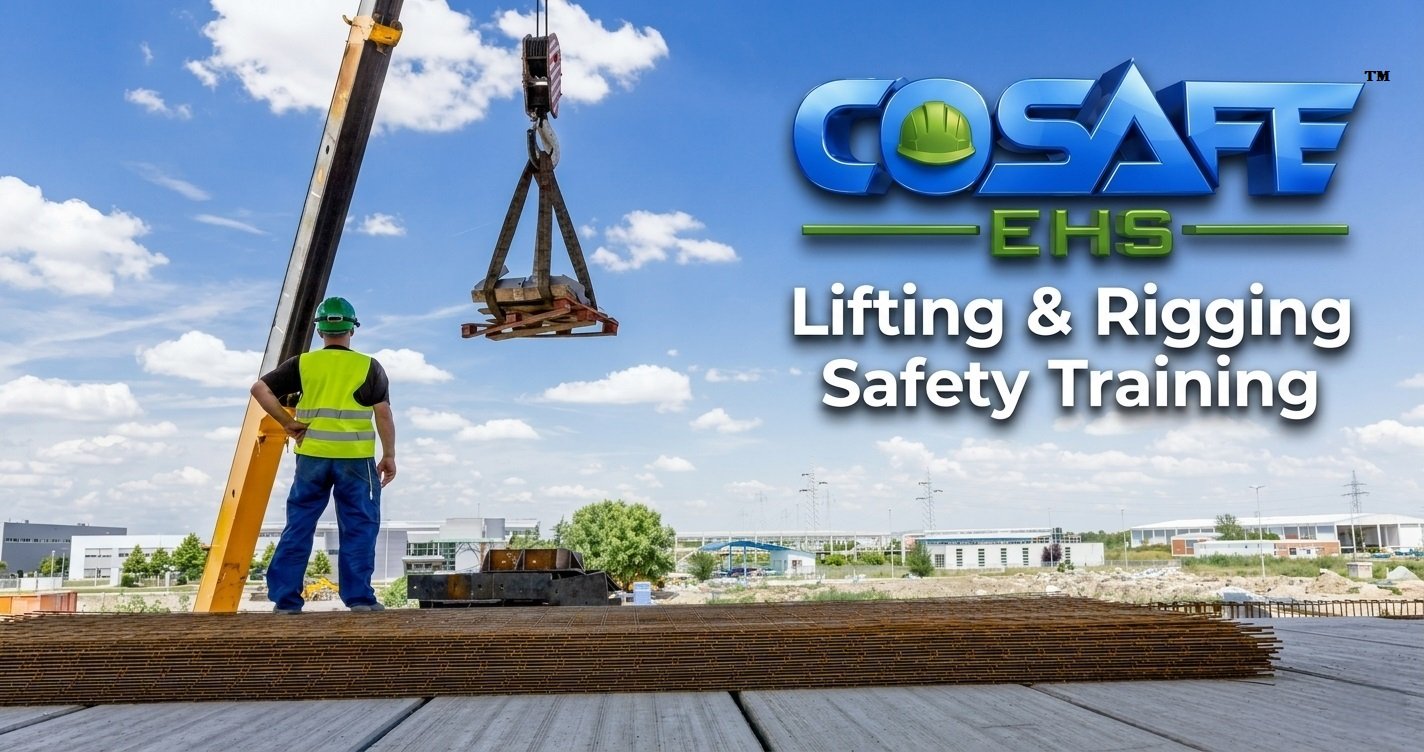
Lifting & Rigging Safety Training in Bangalore
Lifting and rigging operations are among the most critical and high-risk activities performed across industries such as construction, manufacturing, oil & gas, warehousing, logistics, heavy engineering, infrastructure, marine operations, mining, and industrial maintenance. Improper lifting practices, overloaded equipment, unsafe rigging methods, equipment failure, poor communication, inadequate inspections, and lack of operator awareness can result in severe injuries, fatalities, property damage, operational downtime, and major financial losses.
At Cosafe EHS Bangalore, we provide comprehensive and industry-focused Lifting & Rigging Safety Training programs designed to equip workers, riggers, supervisors, crane operators, maintenance personnel, EHS professionals, and industrial teams with the practical knowledge and operational skills required to perform safe lifting operations and rigging activities in compliance with workplace safety standards.
Lifting and rigging safety is a vital part of workplace risk management and occupational safety systems. Industrial studies and safety professionals consistently emphasize that most lifting incidents occur because of poor planning, incorrect sling selection, overloading, communication failure, lack of inspections, and unsafe work practices. Proper training significantly reduces the risk of dropped loads, equipment damage, structural collapse, and worker injuries.
At Cosafe EHS Bangalore, our Lifting & Rigging Safety Training programs combine theoretical learning, practical demonstrations, equipment inspection awareness, lifting calculations, hazard identification exercises, load handling techniques, emergency preparedness, and real-time lifting simulations to help organizations strengthen operational safety and compliance performance.
Cosafe EHS training programs are suitable for:
Construction and infrastructure companies
Manufacturing industries
Oil & gas operations
Warehousing and logistics facilities
Heavy engineering industries
Fabrication and mechanical industries
Marine and offshore operations
Mining and industrial plants
Crane operators and riggers
Maintenance and shutdown teams
Erection and commissioning contractors
EHS and safety professionals
Organizations that invest in proper lifting and rigging safety training improve workplace safety performance, reduce operational risks, prevent lifting incidents, strengthen compliance standards, and enhance workforce competency.
Lifting and rigging operations involve significant workplace risks that can lead to severe injuries, operational disruption, equipment damage, and fatalities if not properly managed. Organizations that invest in structured lifting safety training improve operational reliability, strengthen hazard awareness, reduce workplace incidents, and enhance workforce competency.
At Cosafe EHS Bangalore, our Lifting & Rigging Safety Training programs empower organizations and employees with practical lifting knowledge, rigging awareness, hazard control techniques, inspection practices, and emergency response capability required to safely perform lifting operations in modern industrial environments.
Prevent Lifting Accidents. Improve Operational Safety. Build Safer Workplaces with Cosafe EHS Bangalore.
Training Modules
1. Introduction to Lifting & Rigging Safety
This foundational module introduces participants to lifting operations, rigging principles, and workplace hazards associated with material handling activities.
Topics covered include:
-
Importance of lifting and rigging safety
Common lifting accidents and incident causes
Types of lifting operations
Roles and responsibilities during lifting activities
Safe lifting culture and operational discipline
Importance of planning and supervision
Participants gain a clear understanding of how unsafe lifting practices can lead to serious accidents and operational failures.
2. Fundamentals of Lifting Equipment
Understanding lifting equipment is essential for safe and efficient operations.
This module includes:
Types of cranes and lifting equipment
Hoists, winches, and lifting accessories
Understanding Safe Working Load (SWL) and Working Load Limit (WLL)
Equipment identification and specifications
Operational limitations of lifting devices
Equipment safety markings and inspection tags
Participants learn how correct equipment selection improves lifting safety and operational reliability.
3. Rigging Equipment & Accessories
Rigging accessories play a critical role in load stability and lifting safety.
Training includes:
Types of slings and their applications
Shackles, hooks, eyebolts, and turnbuckles
Wire ropes and chain slings
Sling angle awareness and load distribution
Rigging hardware inspection
Selecting the correct rigging equipment
Participants develop awareness of safe rigging configurations and proper equipment usage.
4. Hazard Identification & Risk Assessment
Hazard recognition is one of the most important parts of safe lifting operations.
Topics covered:
Identifying lifting hazards
Overloading and unstable load risks
Pinch points and crush hazards
Environmental and weather-related risks
Ground stability and structural considerations
Lift planning and risk assessment techniques
Participants learn proactive methods to identify and control lifting hazards before operations begin.
5. Safe Lifting Techniques & Load Handling
Improper lifting practices can result in dropped loads and serious injuries.
Participants are trained in:
Correct lifting techniques
Load balancing principles
Center of gravity awareness
Safe attachment and securing methods
Tag line usage and load control
Preventing swinging and unstable loads
Practical awareness improves load stability and lifting operation safety.
6. Crane Safety Awareness
Crane operations require strict operational control and communication.
Training includes:
Basic crane operation safety
Crane setup and positioning awareness
Load chart understanding basics
Crane communication signals
Boom clearance and overhead hazard awareness
Safe lifting radius considerations
Industry safety experts consistently highlight that crane-related accidents are often preventable through proper planning, inspections, and communication practices.
7. Inspection & Preventive Maintenance Awareness
Regular inspection and maintenance are essential for lifting equipment reliability.
Topics include:
Pre-use inspection procedures
Identifying damaged rigging equipment
Wire rope defect awareness
Inspection documentation basics
Equipment rejection criteria
Preventive maintenance awareness
Participants learn how inspections help prevent equipment failure and lifting incidents.
8. Lifting Plans & Permit-to-Work Awareness
Complex lifting operations require proper planning and authorization.
Participants learn:
Lift planning principles
Critical lift awareness
Permit-to-work system basics
Roles of lifting supervisors and riggers
Communication and coordination procedures
Job safety analysis (JSA) awareness
This module strengthens operational planning and safe execution capability.
9. Communication & Hand Signals
Effective communication is essential for safe lifting coordination.
Training includes:
Standard crane hand signals
Radio communication awareness
Communication during blind lifts
Signalman responsibilities
Coordination between operators and riggers
Emergency stop communication procedures
Participants improve teamwork and communication reliability during lifting operations.
10. Emergency Response During Lifting Operations
Unexpected incidents during lifting operations require immediate and organized response.
Topics covered:
Emergency response procedures
Handling dropped load incidents
Equipment failure response
Safe evacuation during lifting emergencies
Incident reporting awareness
Coordination with emergency services
This module improves workplace preparedness and emergency management capability.
11. Legal Compliance & Safety Standards Awareness
Organizations performing lifting activities must comply with workplace safety requirements and operational standards.
Participants learn:
Workplace lifting safety responsibilities
Inspection and certification awareness
Compliance documentation basics
Safety supervision requirements
Operational accountability
Industry best practices for lifting safety
This module strengthens workplace compliance awareness and operational discipline.
12. Practical Demonstrations & Mock Lifting Exercises
Practical learning is one of the most important components of effective Lifting & Rigging Safety Training.
Activities include:
Sling inspection demonstrations
Safe load attachment practice
Crane communication exercises
Rigging equipment handling demonstrations
Load balancing activities
Mock lifting operations and hazard simulations
Emergency response drills during lifting activities
Hands-on exercises improve participant confidence, hazard awareness, and operational competency.
Training Methodology
At Cosafe EHS Bangalore, we follow a highly practical, industry-oriented, and interactive training methodology designed to maximize operational awareness, lifting safety competency, and workplace compliance performance. Our programs are delivered by experienced EHS professionals, lifting supervisors, industrial safety trainers, and operational experts with real-world lifting and rigging experience.
Interactive Classroom Sessions
Participants receive structured theoretical learning through:
- Visual presentations
- Lifting accident case studies
- Hazard awareness discussions
- Rigging safety workshops
- Operational safety discussions
- Group-based learning activities
This helps participants clearly understand lifting hazards, equipment safety, and accident prevention practices.
Practical Equipment Demonstrations
Practical learning is a core component of our Lifting & Rigging Safety Training methodology.
Participants receive demonstrations on:
- Sling and shackle inspection
- Safe rigging methods
- Correct load securing techniques
- Hand signal communication
- Lifting equipment awareness
- Load balancing and handling procedures
Hands-on demonstrations improve participant confidence and practical workplace readiness.
Scenario-Based Lifting Simulations
We conduct realistic simulations based on actual lifting hazards and industrial lifting operations.
Simulation activities include:
- Critical lifting scenario analysis
- Hazard identification exercises
- Communication failure simulations
- Emergency lifting response exercises
- Rigging configuration assessments
- Load movement coordination drills
This practical approach improves teamwork, hazard recognition, and operational decision-making.
Team-Based Coordination Exercises
Safe lifting operations require strong communication and coordinated teamwork.
Our methodology includes:
- Signalman and operator coordination exercises
- Team-based lifting discussions
- Risk assessment workshops
- Group hazard analysis activities
- Emergency communication drills
- Leadership during lifting operations
Participants learn how effective coordination improves operational safety and lifting reliability.
Mock Drills & Real-Time Operational Practice
Practical mock drills are conducted to strengthen lifting awareness and emergency preparedness.
Exercises include:
- Safe lifting demonstrations
- Rigging setup activities
- Emergency stop response exercises
- Inspection and rejection practice
- Simulated lifting hazard management
- Real-time communication drills
Detailed feedback sessions help participants improve operational safety performance and workplace application capability.
Assessment & Competency Evaluation
Participants are assessed through:
- Practical lifting demonstrations
- Rigging equipment inspections
- Hazard identification exercises
- Written assessments and quizzes
- Scenario-based participation reviews
- Interactive Q&A sessions
Certificates are issued upon successful completion of the training program.
Why Choose Cosafe EHS Bangalore for Lifting & Rigging Safety Training?
- Industry-focused practical lifting safety training
- Experienced lifting and industrial safety trainers
- Realistic rigging and lifting simulations
- Hands-on equipment inspection demonstrations
- Customized programs based on operational risk profiles
- Strong emphasis on hazard identification and accident prevention
- Multi-industry expertise in workplace safety management
- On-site and classroom training options
- Compliance-focused operational safety approach
Cosafe EHS Bangalore is committed to helping organizations improve lifting safety performance, reduce operational risks, strengthen workforce competency, and create safer industrial workplaces through professional Lifting & Rigging Safety Training solutions.
Industries We Serve
Our Lifting & Rigging Safety Training programs are suitable for:
- Construction & Infrastructure Projects
- Manufacturing Industries
- Oil & Gas Operations
- Warehousing & Logistics Facilities
- Heavy Engineering Industries
- Fabrication & Mechanical Industries
- Industrial Plants & Process Industries
- Marine & Offshore Operations
- Mining & Material Handling Operations
- Facility Management Companies
Program Details
Duration: 2–3 Hours (Including Drill)
Certification: Participation Certificate (if required)
Validity: As per company safety policy
Languages: Kannada / Hindi / English / Telugu