






Overview
Ergonomic Safety Training in Bangalore
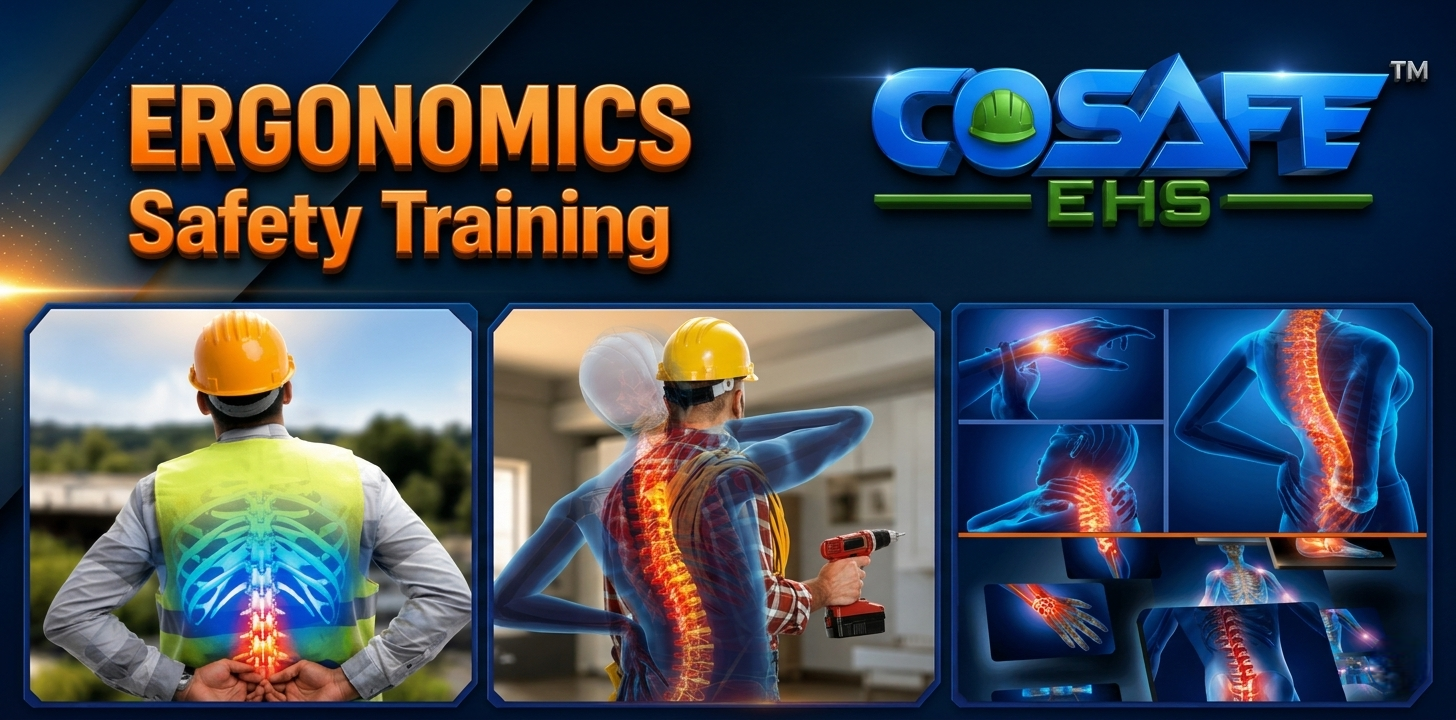
Work-related musculoskeletal disorders (MSDs), repetitive strain injuries, back pain, neck pain, shoulder stress, wrist injuries, posture-related fatigue, and long-term physical discomfort have become some of the most common occupational health concerns across industries. Poor workstation design, improper lifting techniques, repetitive movements, awkward postures, prolonged sitting, continuous screen exposure, and unsafe manual handling practices can significantly affect employee health, productivity, morale, and operational efficiency.
At Cosafe EHS Bangalore, we provide comprehensive and industry-focused Ergonomic Safety Training programs designed to help organizations create healthier, safer, and more productive work environments. Our training equips employees, supervisors, HR teams, EHS professionals, industrial workers, and management personnel with practical ergonomic awareness, posture improvement techniques, workplace risk reduction strategies, and injury prevention methods required to minimize occupational health risks and improve workplace well-being.
Ergonomics is the science of designing workplaces, tasks, tools, equipment, and work environments to fit human capabilities and limitations. Effective ergonomic safety practices reduce physical strain, improve comfort, minimize fatigue, lower absenteeism, increase operational efficiency, and support long-term employee wellness.
Modern workplaces across manufacturing, IT, logistics, healthcare, warehousing, construction, retail, and corporate sectors are increasingly recognizing ergonomics as a critical part of occupational health and workplace safety management. Industry discussions and occupational safety awareness programs consistently emphasize the importance of ergonomic risk reduction, proper workstation setup, manual handling awareness, and employee wellness initiatives to prevent long-term workplace injuries.
At Cosafe EHS Bangalore, our Ergonomic Safety Training programs combine theoretical learning with practical demonstrations, workstation assessments, posture correction exercises, manual handling awareness, stretching techniques, and real-world workplace ergonomics solutions. Our practical approach helps participants understand how everyday work habits directly impact health, safety, comfort, and productivity.
Cosafe EHS Ergonomic Safety Training programs are ideal for:
Corporate offices & IT companies
Manufacturing industries
Warehousing & logistics operations
Hospitals & healthcare facilities
Construction companies
Educational institutions
Call centers & BPO operations
Retail & commercial workplaces
Facility management companies
Industrial plants & maintenance teams
Work-from-home employees
HR & workplace wellness teams
Organizations that invest in ergonomic safety programs often experience reduced workplace injuries, improved employee comfort, lower absenteeism, enhanced productivity, better workforce morale, and stronger occupational health performance.
Poor ergonomics and unsafe work practices can lead to long-term injuries, reduced productivity, employee fatigue, and increased absenteeism. Organizations that invest in ergonomic safety training improve employee well-being, strengthen workplace comfort, reduce occupational health risks, and create healthier work environments.
At Cosafe EHS Bangalore, our Ergonomic Safety Training programs empower organizations and employees with practical ergonomic knowledge, posture improvement techniques, injury prevention strategies, and workplace wellness practices required to build safer, healthier, and more productive workplaces.
Improve Comfort. Prevent Injuries. Build Healthier Workplaces with Cosafe EHS Bangalore.
Training Modules
1. Introduction to Ergonomics & Workplace Safety
This foundational module introduces participants to ergonomic principles and occupational health awareness.
Topics covered include:
Understanding workplace ergonomics
Importance of ergonomic safety
Causes of musculoskeletal disorders (MSDs)
Impact of poor posture and repetitive strain
Ergonomics and workplace productivity
Employee responsibilities for ergonomic safety
Participants gain awareness of how ergonomics directly affects employee health and workplace efficiency.
2. Ergonomic Hazard Identification & Risk Assessment
Identifying ergonomic risks is essential for injury prevention and workplace improvement.
This module includes:
Common ergonomic hazards in workplaces
Repetitive motion injuries
Forceful exertion risks
Awkward posture identification
Static posture awareness
Ergonomic risk assessment techniques
Participants learn proactive methods to identify and control ergonomic risks before injuries occur.
3. Office Ergonomics & Workstation Setup
Improper workstation setup is one of the leading causes of posture-related injuries and discomfort.
Training includes:
Correct desk and chair positioning
Monitor height and viewing angle setup
Keyboard and mouse positioning
Proper sitting posture techniques
Footrest and lumbar support awareness
Reducing screen-related fatigue
Participants learn how properly designed workstations improve comfort and reduce physical strain.
4. Posture Management & Body Mechanics
Poor body posture can lead to chronic pain, fatigue, and long-term health problems.
Topics covered:
Correct standing and sitting posture
Spine alignment awareness
Safe bending and reaching techniques
Body balance and movement control
Reducing strain during repetitive tasks
Ergonomic movement principles
This module helps participants improve posture habits and minimize stress on muscles and joints.
5. Manual Handling & Material Handling Ergonomics
Improper lifting and material handling practices are major causes of workplace injuries.
Participants are trained in:
Safe lifting and carrying techniques
Push and pull safety awareness
Load handling principles
Team lifting techniques
Material handling risk reduction
Preventing back and shoulder injuries
Manual handling safety training is widely recognized as essential for reducing workplace strain injuries and improving operational safety.
6. Repetitive Strain Injury (RSI) Prevention
Repetitive tasks can cause long-term muscle and joint disorders if not properly managed.
Training includes:
Causes of repetitive strain injuries
Wrist, neck, and shoulder stress awareness
Micro-break and movement techniques
Stretching exercises for repetitive tasks
Reducing repetitive motion fatigue
Early symptom identification
Participants learn how small adjustments can significantly reduce repetitive stress injuries.
7. Industrial Ergonomics & Workplace Design
Industrial operations often involve physically demanding activities and ergonomic risks.
Topics include:
Ergonomic safety in manufacturing environments
Tool and equipment positioning
Assembly line ergonomics
Workstation design principles
Reducing fatigue during repetitive industrial tasks
Ergonomic improvements in production areas
This module is especially valuable for manufacturing, logistics, and industrial operations.
8. Ergonomics for Work-from-Home Employees
Remote work environments can create hidden ergonomic risks if not properly managed.
Participants learn:
Home workstation setup techniques
Laptop ergonomics awareness
Sitting posture during remote work
Reducing prolonged sitting risks
Lighting and screen positioning
Healthy work-from-home practices
This module supports healthier and safer remote working habits.
9. Stretching, Wellness & Fatigue Management
Employee wellness and movement play a major role in ergonomic safety.
Training includes:
Workplace stretching exercises
Muscle relaxation techniques
Eye strain reduction methods
Fatigue management awareness
Stress reduction and wellness practices
Importance of movement and hydration
Participants gain practical techniques to improve comfort and reduce fatigue during work activities.
10. Ergonomic Safety for Specific Industries
Different industries face unique ergonomic challenges.
Topics covered:
Office ergonomics
Construction ergonomics awareness
Healthcare worker ergonomic risks
Warehouse and logistics ergonomics
Retail workplace ergonomic practices
Industrial maintenance ergonomics
Customized ergonomic awareness improves safety performance across different work environments.
11. Ergonomic Improvement Planning & Reporting
Organizations benefit from structured ergonomic management systems.
Participants learn:
Reporting ergonomic concerns
Conducting ergonomic inspections
Identifying improvement opportunities
Workplace ergonomic assessment basics
Employee participation in ergonomic safety
Continuous ergonomic improvement strategies
This module strengthens organizational ergonomic safety culture and workplace wellness initiatives.
12. Practical Demonstrations & Ergonomic Simulations
Practical learning is one of the most important parts of effective Ergonomic Safety Training.
Activities include:
Workstation setup demonstrations
Safe lifting practice sessions
Posture correction exercises
Stretching and movement activities
Ergonomic hazard identification exercises
Workplace ergonomic simulations
Practical sessions improve participant awareness, confidence, and day-to-day ergonomic safety habits.
Training Methodology
At Cosafe EHS Bangalore, we follow a highly practical, interactive, and industry-oriented training methodology designed to improve ergonomic awareness, reduce workplace injuries, and strengthen employee wellness. Our training programs are conducted by experienced EHS professionals, occupational safety trainers, and workplace health experts with practical industry knowledge.
Interactive Classroom Sessions
Participants receive structured theoretical learning through:
- Visual presentations
- Workplace injury case studies
- Occupational health discussions
- Ergonomic awareness videos
- Group-based learning activities
- Real-world workplace examples
This helps participants clearly understand ergonomic risks and injury prevention strategies.
Practical Workstation Demonstrations
Practical ergonomic learning is a core component of our training methodology.
Participants receive demonstrations on:
- Correct workstation setup
- Chair and desk adjustments
- Monitor positioning techniques
- Safe lifting and material handling
- Proper sitting and standing posture
- Stretching and movement exercises
Hands-on demonstrations improve comfort, posture awareness, and injury prevention capability.
Scenario-Based Ergonomic Simulations
We conduct realistic workplace simulations based on actual ergonomic risks and operational activities.
Simulation activities include:
- Office workstation assessments
- Manual handling scenarios
- Industrial task ergonomic analysis
- Repetitive motion awareness exercises
- Fatigue management discussions
- Workplace posture correction activities
This practical approach improves awareness and helps participants apply ergonomic principles in daily work activities.
Team-Based Learning & Workplace Participation
Effective ergonomic improvement requires active employee participation and organizational support.
Our methodology includes:
- Group ergonomic assessments
- Workplace safety discussions
- Team-based improvement exercises
- Employee wellness awareness sessions
- Collaborative ergonomic planning activities
- Workplace comfort evaluations
Participants learn how teamwork improves ergonomic safety culture and workplace wellness.
Stretching & Wellness Activities
Movement and wellness activities are integrated into our training methodology.
Exercises include:
- Guided stretching routines
- Desk movement exercises
- Relaxation techniques
- Eye strain reduction activities
- Fatigue reduction practices
- Muscle mobility awareness exercises
These activities help participants develop healthier workplace habits.
Assessment & Competency Evaluation
Participants are assessed through:
- Ergonomic hazard identification exercises
- Practical workstation setup demonstrations
- Manual handling assessments
- Written evaluations and quizzes
- Participation in ergonomic simulations
- Interactive Q&A sessions
Certificates are issued upon successful completion of the training program.
Why Choose Cosafe EHS Bangalore for Ergonomic Safety Training?
- Industry-focused ergonomic safety training programs
- Experienced EHS and occupational health trainers
- Practical workstation and posture improvement guidance
- Customized training based on workplace risk profiles
- Hands-on ergonomic demonstrations and simulations
- Focus on employee wellness and injury prevention
- On-site and classroom training options
- Multi-industry operational expertise
- Strong emphasis on productivity and workplace comfort
Cosafe EHS Bangalore is committed to helping organizations create healthier, safer, and more productive work environments through professional ergonomic safety and workplace wellness training solutions.
Industries We Serve
Our Ergonomic Safety Training programs are suitable for:
- Corporate Offices & IT Companies
- Manufacturing Industries
- Warehousing & Logistics Facilities
- Hospitals & Healthcare Services
- Educational Institutions
- Construction & Infrastructure Projects
- Call Centers & BPO Operations
- Facility Management Companies
- Retail & Commercial Workplaces
- Engineering & Industrial Operations
Program Details
Duration: Half Day (3–4 Hours) / Full Day (5–6 Hours)
Certification: Certificate will be provided after successful completion
Validity: 1–2 Years
Languages: Kannada / Hindi / English / Telugu