






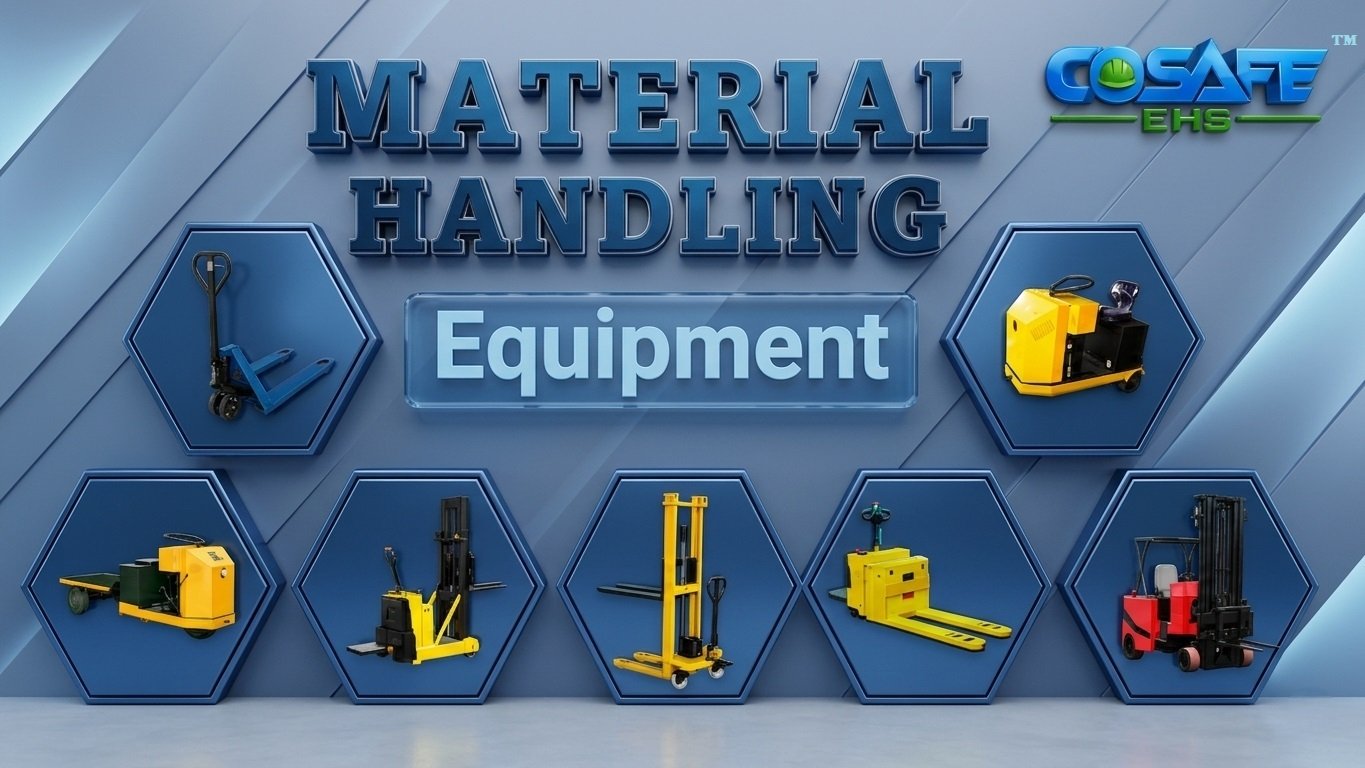
Overview
MHE (Material Handling Equipment) Safety Training in Bangalore
MHE Safety Training | Forklift Safety Training | Material Handling Safety Course
Material Handling Equipment (MHE) plays a critical role in modern industrial operations, warehouses, logistics facilities, manufacturing plants, distribution centers, construction projects, ports, shipping terminals, e-commerce fulfillment centers, and large-scale storage facilities. Equipment such as forklifts, pallet trucks, stackers, reach trucks, hand pallet jacks, order pickers, scissor lifts, conveyors, cranes, and material transport systems help organizations improve productivity, reduce manual handling efforts, and streamline operational efficiency.
However, improper operation, overloading, poor maintenance, unsafe driving practices, inadequate operator training, pedestrian interaction hazards, equipment failure, and lack of workplace traffic management can lead to serious injuries, fatalities, property damage, inventory loss, operational downtime, and costly legal liabilities.
At Cosafe EHS Bangalore, we provide comprehensive and industry-focused MHE (Material Handling Equipment) Safety Training programs designed to help organizations, operators, supervisors, warehouse personnel, logistics teams, and safety professionals safely operate, inspect, maintain, and manage material handling equipment while improving workplace safety and operational efficiency.
Material handling accidents remain one of the most common causes of workplace injuries across warehousing, logistics, manufacturing, and industrial sectors. Industry safety studies consistently highlight that forklift collisions, load instability, equipment tip-overs, struck-by incidents, falling materials, pedestrian interactions, and unsafe operating behaviors are among the leading causes of MHE-related accidents. Proper training significantly reduces these risks while improving operational productivity and compliance.
Modern workplaces depend heavily on MHE systems to move, store, retrieve, transport, and distribute materials efficiently. Organizations that fail to implement structured MHE safety programs often experience increased accident rates, equipment damage, reduced productivity, inventory losses, and operational disruptions.
At Cosafe EHS Bangalore, our MHE Safety Training programs combine theoretical knowledge, practical demonstrations, operator awareness, hazard identification exercises, workplace traffic management principles, equipment inspection techniques, emergency preparedness, and real-world operational simulations to build safer and more productive workplaces.
Cosafe EHS Material Handling Equipment Safety Training programs are suitable for:
- Warehouses and distribution centers
- Manufacturing industries
- Logistics and supply chain companies
- E-commerce fulfillment centers
- Construction projects
- Industrial plants and process industries
- Shipping and port operations
- Retail storage facilities
- Automotive industries
- Facility management operations
- Forklift operators and warehouse staff
- EHS and safety professionals
Organizations that invest in structured MHE Safety Training programs improve workforce competency, reduce workplace incidents, strengthen compliance performance, increase operational efficiency, and create safer working environments. Effective MHE training supports worker safety, regulatory compliance, equipment care, inventory control, and operational excellence.
Material Handling Equipment plays a vital role in modern industrial and warehouse operations, but unsafe operation can result in severe workplace injuries, equipment damage, inventory loss, operational downtime, and legal liabilities. Organizations that invest in structured MHE Safety Training improve workforce awareness, strengthen operational discipline, reduce workplace incidents, and create safer and more productive work environments.
At Cosafe EHS Bangalore, our MHE Safety Training programs empower organizations and employees with practical operational knowledge, hazard identification capability, load handling awareness, equipment inspection competency, emergency preparedness skills, and workplace safety practices required to safely manage material handling operations in modern industrial environments.
Prevent Material Handling Accidents. Improve Operational Efficiency. Build Safer Workplaces with Cosafe EHS Bangalore.
Training Modules
1. Introduction to Material Handling Equipment Safety
This foundational module introduces participants to MHE operations, workplace hazards, and safety responsibilities.
Topics covered include:
Importance of MHE safety in industrial operations
Common material handling accidents and incident causes
Types of material handling equipment used in workplaces
Operator roles and responsibilities
Workplace safety culture and accountability
Importance of training and operational discipline
Participants gain awareness of how unsafe equipment operation can lead to severe injuries, operational disruption, and financial losses.
2. Types of Material Handling Equipment
Understanding different types of MHE is essential for safe operation.
This module includes:
Forklifts and powered industrial trucks
Reach trucks and stackers
Pallet jacks and pallet trucks
Order pickers and warehouse equipment
Scissor lifts and elevated platforms
Conveyors and automated handling systems
Material transport and lifting equipment
Participants learn equipment applications, limitations, and safe operating requirements.
3. Hazard Identification & Risk Assessment
Material handling operations involve multiple workplace hazards that require proactive risk management.
Training includes:
Struck-by hazards
Crush and pinch point hazards
Load instability risks
Pedestrian interaction hazards
Tip-over and rollover risks
Workplace traffic hazards
Risk assessment techniques
Participants learn proactive methods to identify and minimize operational hazards before starting work activities.
4. Forklift Safety Awareness
Forklifts are among the most widely used and potentially hazardous MHE systems.
Topics covered:
Forklift safety fundamentals
Common forklift accident causes
Safe startup and shutdown procedures
Load handling principles
Forklift stability awareness
Safe maneuvering techniques
Parking and shutdown safety
Forklift incidents can result in collisions, falls, electrocution, amputations, and fatalities when operators lack proper training.
5. Pre-Operational Inspection Procedures
Daily inspections help identify unsafe conditions before equipment operation.
Participants are trained in:
Pre-use equipment inspection procedures
Tire and wheel condition checks
Brake and steering verification
Hydraulic system inspection basics
Warning devices and lights inspection
Reporting defects and unsafe conditions
Regular inspections improve equipment reliability and reduce workplace incidents.
6. Safe Load Handling & Stability Management
Improper load handling is a major cause of MHE accidents.
Training includes:
Understanding load capacity limits
Load center awareness
Weight distribution principles
Safe lifting and lowering techniques
Handling unstable and irregular loads
Preventing dropped-load incidents
Participants improve operational awareness and safe material handling competency.
7. Warehouse Traffic Management & Pedestrian Safety
Interaction between MHE equipment and pedestrians creates significant workplace risks.
Topics include:
Traffic flow management principles
Designated travel routes
Pedestrian exclusion zones
Blind spot awareness
Horn and warning signal usage
Speed control and intersection safety
Maintaining clear separation between pedestrians and moving equipment significantly reduces workplace accidents.
8. Manual Material Handling & Ergonomic Safety
Not all material handling activities involve powered equipment.
Participants learn:
Safe lifting techniques
Ergonomic awareness principles
Repetitive motion injury prevention
Proper posture and body mechanics
Team lifting procedures
Material handling aids and tools
This module helps reduce musculoskeletal injuries and workplace fatigue.
9. Battery Charging & Fuel Handling Safety
MHE operations often involve electrical charging stations and fuel systems.
Training includes:
Battery charging safety awareness
Hydrogen gas hazard awareness
Fuel handling precautions
Electrical hazard identification
Spill response basics
Charging area safety practices
Participants improve awareness of operational hazards associated with MHE energy systems.
10. Equipment Maintenance & Operational Care
Proper maintenance improves equipment safety and operational reliability.
Topics covered:
Preventive maintenance awareness
Daily care and housekeeping practices
Reporting maintenance issues
Equipment downtime prevention basics
Safe cleaning procedures
Maintenance safety precautions
This module strengthens operational discipline and equipment longevity.
11. Emergency Preparedness & Incident Response
Material handling incidents require immediate and organized response.
Participants learn:
Emergency shutdown procedures
Collision response awareness
Equipment failure management basics
Fire emergency response awareness
Injury reporting procedures
Coordination with emergency responders
Preparedness improves workplace resilience and emergency response capability.
12. Personal Protective Equipment (PPE) for MHE Operations
Proper PPE helps protect workers from material handling hazards.
Training includes:
Safety helmets and head protection
High-visibility clothing awareness
Safety footwear requirements
Hand protection considerations
Eye protection awareness
PPE inspection and maintenance basics
Proper protective equipment improves operator safety and workplace visibility.
13. Legal Compliance & Workplace Safety Standards
Organizations operating material handling equipment must comply with workplace safety regulations and operational standards.
Participants learn:
MHE safety compliance awareness
Operator competency requirements
Inspection and audit basics
Documentation and reporting practices
Workplace safety responsibilities
Industry best practices for MHE management
This module improves compliance awareness and operational accountability.
14. Practical Demonstrations & Mock Drills
Practical learning is one of the most important components of effective MHE Safety Training.
Activities include:
Equipment inspection demonstrations
Forklift operational awareness exercises
Load handling practice sessions
Hazard identification activities
Pedestrian safety simulations
Emergency response drills
Traffic management exercises
Hands-on practical exercises improve participant confidence, operational awareness, and workplace readiness.
Training Methodology
At Cosafe EHS Bangalore, we follow a highly practical, interactive, and industry-oriented training methodology designed to improve MHE operational awareness, hazard identification capability, emergency preparedness, and workplace compliance performance. Our programs are delivered by experienced EHS professionals, warehouse safety trainers, forklift specialists, industrial safety experts, and logistics safety consultants with extensive field experience.
Interactive Classroom Sessions
Participants receive structured theoretical learning through:
- Visual presentations
- Material handling accident case studies
- Warehouse safety discussions
- Operational risk workshops
- Compliance-focused learning sessions
- Group-based safety activities
This helps participants clearly understand equipment hazards, operational risks, and preventive safety measures.
Practical Equipment Demonstrations
Practical learning is a core component of our MHE Safety Training methodology.
Participants receive demonstrations on:
- Pre-operational equipment inspections
- Load handling awareness techniques
- Safe maneuvering practices
- Parking and shutdown procedures
- PPE inspection and usage
- Workplace traffic management principles
Hands-on demonstrations improve participant confidence and workplace operational readiness.
Scenario-Based Operational Simulations
We conduct realistic simulations based on actual material handling hazards and workplace challenges.
Simulation activities include:
- Forklift hazard identification exercises
- Load instability scenarios
- Equipment malfunction awareness drills
- Pedestrian safety simulations
- Warehouse traffic coordination activities
- Emergency response exercises
This practical approach improves decision-making, hazard recognition, and operational discipline.
Team-Based Safety Coordination Exercises
Material handling safety requires strong communication, coordination, and operational accountability.
Our methodology includes:
- Group risk assessment activities
- Safety communication exercises
- Traffic management workshops
- Team-based equipment inspections
- Leadership and accountability discussions
- Incident prevention activities
Participants learn how collaborative safety practices improve workplace safety performance.
Mock Drills & Real-Time Operational Practice
Practical drills are conducted to strengthen emergency preparedness and operational awareness.
Exercises include:
- Forklift safety demonstrations
- Equipment inspection drills
- Load handling simulations
- Emergency response exercises
- Pedestrian safety coordination activities
- Incident reporting practice sessions
Detailed feedback sessions help participants improve workplace application capability and operational safety performance.
Assessment & Competency Evaluation
Participants are evaluated through:
- Practical equipment demonstrations
- Hazard identification exercises
- Operational safety participation
- Written assessments and quizzes
- Scenario-based evaluations
- Interactive Q&A sessions
Certificates are issued upon successful completion of the training program.
Why Choose Cosafe EHS Bangalore for MHE Safety Training?
- Industry-focused practical MHE safety training
- Experienced warehouse and industrial safety trainers
- Realistic operational and emergency simulations
- Hands-on equipment inspection demonstrations
- Customized programs based on workplace risk profiles
- Strong emphasis on accident prevention and compliance
- Multi-industry expertise in workplace safety management
- On-site and classroom training options
- Interactive and scenario-based learning methodology
Cosafe EHS Bangalore is committed to helping organizations reduce material handling accidents, improve operational safety performance, strengthen workforce competency, and create safer workplaces through professional Material Handling Equipment Safety Training solutions.
Industries We Serve
Our MHE Safety Training programs are suitable for:
- Warehouses & Distribution Centers
- Logistics & Supply Chain Operations
- Manufacturing Industries
- E-Commerce Fulfillment Facilities
- Construction Projects
- Industrial Plants & Process Industries
- Automotive Industries
- Shipping & Port Operations
- Retail Storage Facilities
- Facility Management Companies
Program Details
Duration: Half Day (3–4 Hours) / Full Day (5–6 Hours)
Certification: Certificate provided upon successful completion
Validity: 1–2 Years
Languages: Kannada / Hindi / English / Telugu