






Overview
CPR (Cardiopulmonary Resuscitation) Training in Bangalore
Cardiac emergencies can happen anytime and anywhere — in workplaces, factories, offices, construction sites, schools, hospitals, shopping malls, or public spaces. During sudden cardiac arrest, choking, drowning, electric shock, or respiratory failure, immediate action within the first few minutes can significantly increase survival chances. This is where CPR (Cardiopulmonary Resuscitation) Training becomes a critical life-saving skill.
At Cosafe EHS Bangalore, we provide industry-focused CPR Training programs designed to equip individuals and organizations with practical emergency response skills required to save lives during critical medical emergencies. Our training combines internationally accepted CPR techniques, emergency response protocols, and hands-on practical sessions to ensure participants gain the confidence to act effectively under pressure.
CPR is a proven emergency procedure used to maintain blood circulation and oxygen flow to the brain and vital organs when a person’s heart stops beating or breathing stops. Immediate CPR performed before professional medical help arrives can dramatically improve survival outcomes during cardiac arrest emergencies. Workplace preparedness and CPR awareness are now considered essential components of modern occupational health and safety systems.
Our CPR Training program is ideal for:
Corporate employees
Safety officers and EHS professionals
Industrial workers and supervisors
Security personnel
Teachers and educational staff
Construction workers
Healthcare support staff
Facility management teams
Fire & emergency response teams
General public and community responders
At Cosafe EHS Bangalore, our goal is not just certification — we focus on building real-life emergency response capability through practical learning, scenario-based exercises, and confidence-building activities. Our training methodology is aligned with workplace safety requirements and emergency preparedness standards.
CPR is not just a medical skill — it is a life-saving responsibility that can make the difference between life and death during emergencies. Immediate and effective CPR response can significantly improve survival rates until professional medical assistance arrives.
At Cosafe EHS Bangalore, our CPR (Cardiopulmonary Resuscitation) Training program empowers individuals and organizations with practical emergency response knowledge, confidence, and hands-on life-saving skills required to respond effectively during critical situations.
Be Prepared. Save Lives. Build a Safer Workplace with Cosafe EHS Bangalore.
Training Modules
1. Introduction to CPR & Emergency Response
This foundational module introduces participants to the importance of CPR and emergency medical response.
Topics covered include:
Understanding cardiac arrest and respiratory emergencies
Difference between heart attack and cardiac arrest
Importance of early CPR intervention
Chain of Survival concept
Emergency scene assessment and personal safety
Legal and ethical responsibilities during emergencies
Participants learn how rapid response during the first few minutes can save lives.
2. Basic Human Anatomy & Circulation System
Understanding how the heart and lungs function is essential for effective CPR.
This module covers:
Basics of the cardiovascular system
Function of the heart and lungs
Blood circulation and oxygen supply
Causes of sudden cardiac arrest
Effects of oxygen deprivation on the brain
This knowledge helps participants understand why proper CPR technique is critical.
3. Adult CPR Techniques
This practical module focuses on adult CPR procedures using internationally accepted emergency response methods.
Training includes:
Checking responsiveness and breathing
Activating emergency medical services
Proper chest compression techniques
Compression depth and rate
Rescue breathing procedures
Hands-only CPR techniques
Recovery position procedures
Participants receive hands-on practice to develop correct technique and confidence.
4. Child & Infant CPR
Children and infants require different CPR approaches compared to adults.
Participants learn:
Child and infant emergency assessment
Infant CPR compression techniques
Rescue breathing for children and infants
Pediatric choking response procedures
Safe handling during pediatric emergencies
Special emphasis is placed on gentle but effective emergency response techniques.
5. Automated External Defibrillator (AED) Training
AEDs play a critical role in increasing survival during cardiac arrest situations.
This module covers:
Introduction to AED devices
When and how to use an AED
AED safety precautions
Step-by-step AED operation
Combining CPR with AED response
Workplace AED awareness
Participants practice AED usage through realistic training simulations.
6. Choking Emergency Management
Airway obstruction emergencies require immediate intervention.
Participants are trained in:
Recognizing partial and complete choking
Heimlich maneuver techniques
Choking response for adults, children, and infants
Safe airway clearance methods
Post-emergency care procedures
Practical demonstrations help trainees perform choking rescue techniques confidently.
7. Workplace Medical Emergency Response
This module prepares participants to respond effectively during common workplace medical emergencies.
Topics include:
Electrical shock response
Drowning and suffocation emergencies
Collapse and unconsciousness management
Bleeding and trauma support basics
Heat stress and dehydration response
Emergency communication procedures
The training is especially valuable for industrial, construction, and high-risk work environments.
8. Infection Control & Safety Precautions
Safety during CPR is equally important for rescuers.
Participants learn:
Universal precautions during emergencies
Use of gloves and barrier devices
Infection prevention techniques
Safe casualty handling
Post-incident hygiene practices
This module helps ensure safe emergency response practices.
9. Mock Drills & Emergency Simulations
Practical learning is one of the most important aspects of CPR training.
Participants undergo:
Realistic cardiac arrest simulations
CPR timing and response drills
AED practical exercises
Team-based emergency response scenarios
Casualty assessment exercises
Performance evaluation and feedback sessions
These simulations improve reaction time, coordination, and confidence during real emergencies.
Training Methodology
At Cosafe EHS Bangalore, we follow a highly practical, interactive, and industry-oriented training methodology designed to maximize learning effectiveness and real-world emergency response capability.
Our CPR Training methodology includes:
Interactive Classroom Sessions
- Participants receive theoretical training through:
- Visual presentations
- Real-life emergency case studies
- Videos and emergency response demonstrations
- Guided discussions and knowledge-sharing sessions
This helps participants understand the science and importance of CPR clearly.
Hands-On Practical Training
Practical learning is the core of our CPR Training program.
Participants practice:
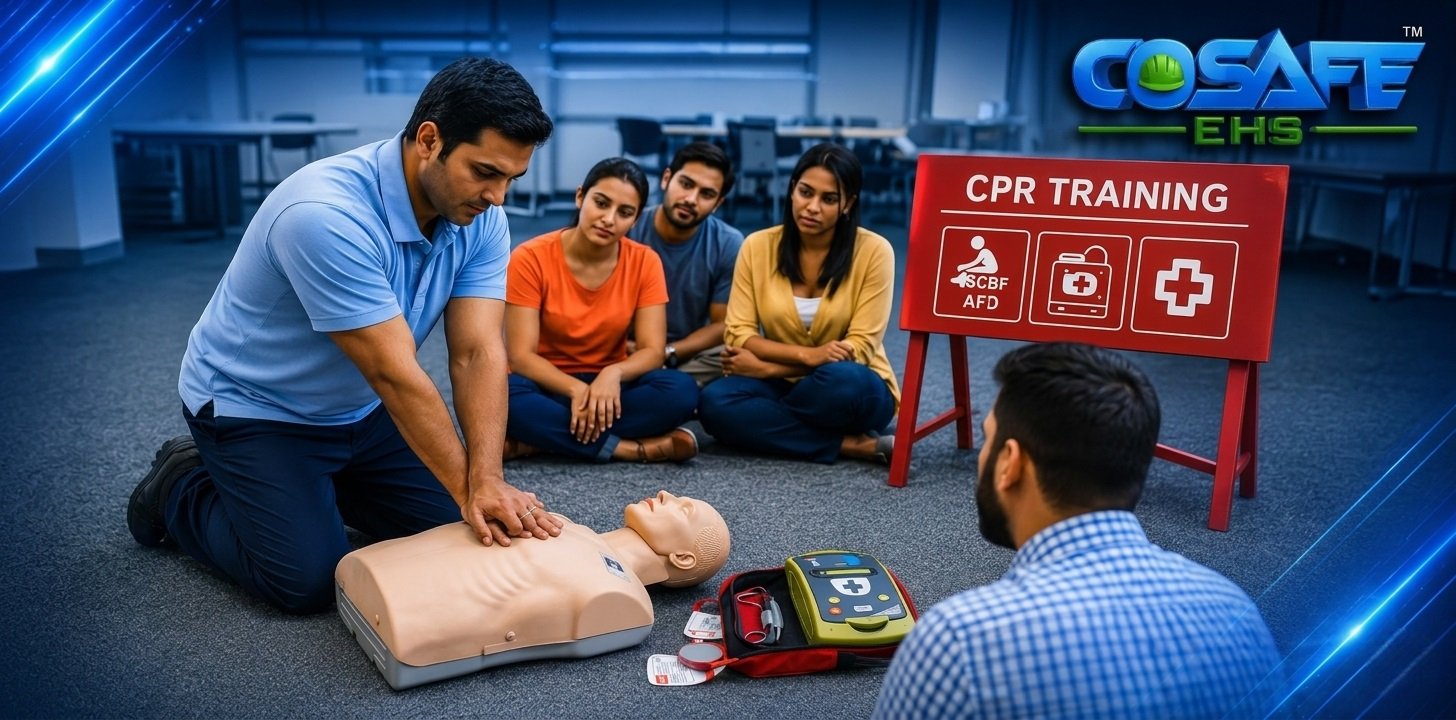
- Chest compressions on CPR manikins
- Rescue breathing techniques
- AED operation simulations
- Choking rescue procedures
- Emergency casualty handling
Hands-on sessions help participants build muscle memory and practical confidence.
Scenario-Based Emergency Simulations
We conduct realistic emergency simulations to prepare participants for actual workplace emergencies.
- Training scenarios include:
- Sudden cardiac arrest response
- Workplace collapse emergencies
- Choking incidents
- Electrical shock emergencies
- Multi-person emergency coordination exercises
This approach develops quick decision-making and emergency response readiness.
Team-Based Learning & Coordination
Emergency response often requires teamwork and communication.
Our methodology includes:
- Group emergency response activities
- Team coordination exercises
- Communication drills
- Leadership during emergencies
- Incident response role allocation
Participants learn how to work effectively during high-pressure situations.
Assessment & Competency Evaluation
To ensure effective learning outcomes, participants are evaluated through:
- Practical CPR demonstrations
- Emergency response simulations
- AED handling assessments
- Scenario-based performance reviews
- Interactive Q&A sessions
Certificates are issued upon successful completion of the training program.
Why Choose Cosafe EHS Bangalore for CPR Training?
- Industry-focused practical CPR training
- Experienced EHS and emergency response trainers
- Hands-on training with CPR manikins and AED simulations
- Corporate on-site CPR training programs
- Customized training for industries and organizations
- Realistic emergency response drills
- Training aligned with workplace safety standards
- Multi-language training support (Kannada, Hindi, English, Telugu)
- Certification after successful completion
Cosafe EHS Bangalore is committed to building safer workplaces and empowering individuals with life-saving emergency response skills through practical and professional CPR training solutions.
Industries We Serve
Our CPR Training programs are suitable for:
- Manufacturing Industries
- Construction Companies
- IT & Corporate Offices
- Hospitals & Healthcare Facilities
- Educational Institutions
- Warehouses & Logistics Companies
- Shopping Malls & Commercial Buildings
- Hotels & Hospitality Industry
- Facility Management Companies
- Oil & Gas Industries
- Public Safety & Security Teams
Program Details
Duration: Half Day (3–4 Hours) / Full Day (5–6 Hours)
Certification: Certificate provided upon successful completion
Validity: 1–2 Years
Languages: Kannada / Hindi / English / Telugu