Bangalore Office
Warehouse No 4, Survey No 198/6, Janatha Colony, Dommsandra Bangalore Karnataka 562125

Warehouse No 4, Survey No 198/6, Janatha Colony, Dommsandra Bangalore Karnataka 562125
Godown No 3/C, Survey No. 217, Beside ORR, Shamshabad, R.R. District, Hyderabad, Telangana - 501218
+91 7892978960
corporate@cosafe.in
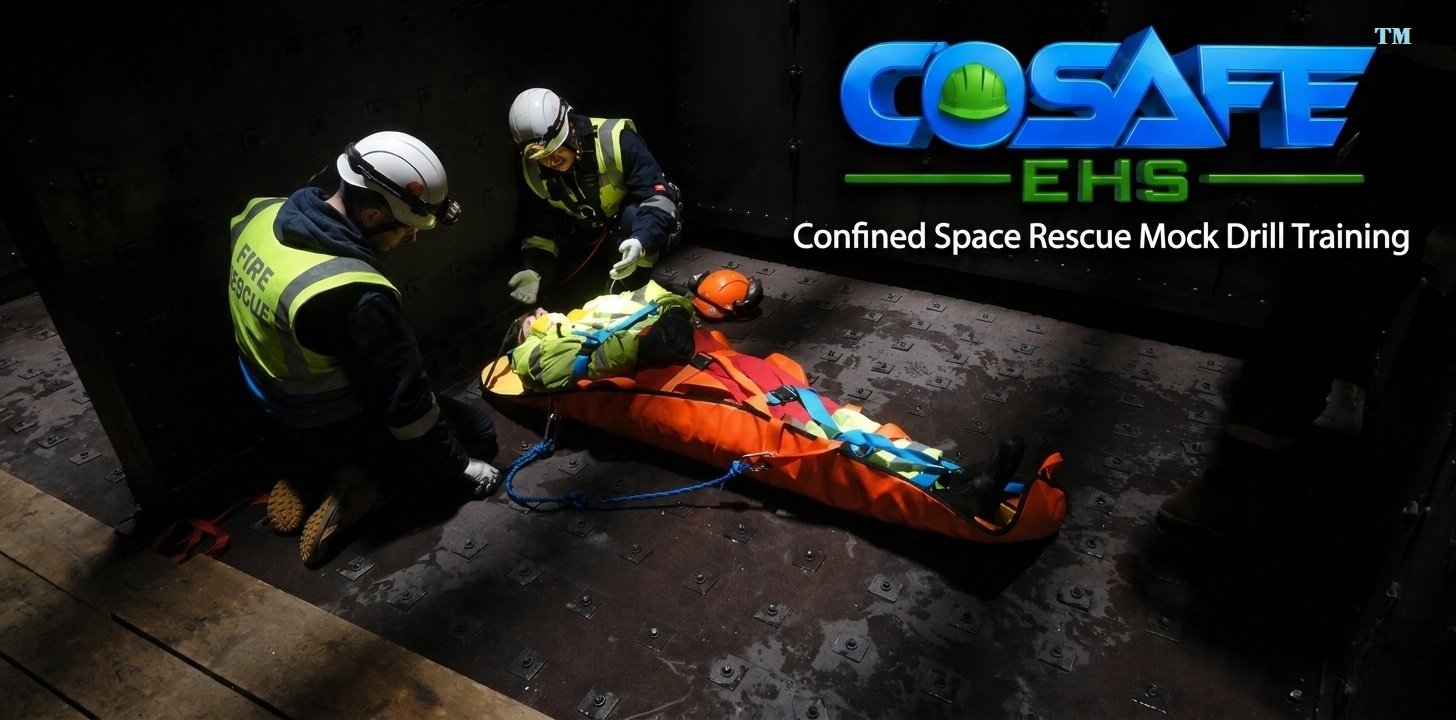
Confined spaces are among the most hazardous work environments found in industrial operations. Tanks, vessels, silos, pits, manholes, tunnels, sewers, boilers, storage tanks, pipelines, underground vaults, and process equipment often contain life-threatening hazards such as oxygen deficiency, toxic gases, flammable atmospheres, engulfment risks, mechanical hazards, and restricted entry or exit points. Due to these unique challenges, confined space incidents frequently become complex rescue situations requiring specialized planning, equipment, and trained personnel. Studies have shown that many confined space fatalities involve rescuers attempting emergency rescue without adequate training or preparation.
At Cosafe EHS Bangalore, our Confined Space Rescue Mock Drill Training Program is designed to prepare Emergency Response Teams (ERT), rescue personnel, safety professionals, supervisors, and confined space workers to respond effectively during confined space emergencies. The training combines rescue planning, hazard assessment, emergency response procedures, rescue equipment operation, casualty recovery techniques, and full-scale rescue simulations that replicate real workplace emergencies.
Our training program focuses on developing practical rescue competencies while ensuring compliance with workplace safety requirements, confined space entry procedures, permit-to-work systems, emergency preparedness programs, and industry best practices.
A confined space emergency can escalate within seconds. Toxic atmospheres, oxygen-deficient environments, hydrogen sulfide exposure, engulfment hazards, equipment entrapment, heat stress, and sudden medical emergencies can quickly incapacitate workers. Rescue operations are often difficult because of limited access, poor visibility, restricted movement, and hazardous atmospheric conditions. Proper rescue planning and regular mock drills significantly improve emergency preparedness and response effectiveness.
The primary objectives include:
Confined space rescue training is highly relevant for:
Organizations that conduct regular rescue drills benefit from:
Improved workplace safety performance
This training program is ideal for:
At Cosafe EHS Bangalore, our Confined Space Rescue Mock Drill Training is customized according to industry hazards, confined space configurations, rescue challenges, and organizational emergency response requirements.
Confined space emergencies are among the most challenging workplace incidents due to hazardous atmospheres, restricted access, limited visibility, and complex rescue requirements. Without proper planning, training, and regular rescue drills, even minor incidents can quickly escalate into life-threatening situations. Many confined space fatalities involve unplanned rescue attempts by untrained personnel, highlighting the importance of structured rescue preparedness.
At Cosafe EHS Bangalore, our Confined Space Rescue Mock Drill Training Program equips Emergency Response Teams, confined space workers, safety professionals, and rescue personnel with the knowledge, practical skills, and confidence needed to conduct safe and effective rescue operations. Through realistic simulations, specialized equipment training, and scenario-based exercises, we help organizations strengthen emergency preparedness, protect workers, and save lives.
Prepare for Emergencies. Strengthen Rescue Capability. Protect Lives. Choose Cosafe EHS Bangalore for Professional Confined Space Rescue Mock Drill Training in Bangalore.
Participants receive a comprehensive understanding of confined space emergencies and rescue operations.
Topics include:
Participants gain a strong foundation in confined space rescue awareness.
Understanding hazards is essential before initiating rescue operations.
Topics include:
Participants learn how to identify and evaluate confined space hazards.
Safe rescue begins with proper confined space management.
Topics include:
Participants understand the relationship between entry controls and rescue readiness.
Clear role definition improves rescue effectiveness.
Training includes:
Participants learn how emergency response teams operate during confined space incidents.
Atmospheric hazards remain the leading cause of confined space fatalities.
Topics include:
Participants learn how to monitor and control atmospheric risks.
Rescue operations depend on specialized equipment.
Training includes:
Participants develop familiarity with rescue equipment and applications.
Non-entry rescue is often the safest rescue option.
Topics include:
Participants learn techniques for recovering victims without entering the confined space.
Some emergencies require trained rescuers to enter confined spaces.
Topics include:
Participants understand the complexities of entry rescue operations.
Rescue teams must be prepared for hazardous atmospheres.
Training includes:
Participants gain awareness of respiratory protection requirements.
Proper casualty management improves survival outcomes.
Topics include:
Participants learn safe casualty handling techniques.
Effective communication is critical during rescue operations.
Training includes:
Participants strengthen emergency coordination skills.
Every confined space requires a rescue strategy.
Topics include:
Participants learn how effective rescue planning supports successful emergency response. Rescue plans should be documented, clearly communicated, and regularly practiced through drills.
Participants engage in realistic rescue simulations.
Activities include:
Participants experience realistic emergency conditions.
Different rescue challenges are introduced.
Exercises include:
Participants develop adaptive rescue capabilities.
Learning from drills strengthens future performance.
Topics include:
Participants understand how organizations improve rescue preparedness through ongoing evaluation.
Our training methodology ensures maximum practical exposure:
Our training aligns with the following Indian Standards and safety guidelines:
Details Information
Training Duration:- 1 Day / 2 Days
Mode of Training:- Classroom + Practical
Certification:- Certificate Provided
Certificate Validity:- 1–2 Years
Training Location:- Onsite / Training Center
Languages Available:- Kannada / Hindi / English / Telugu