






Overview
First Aid Training Course in Bangalore
Medical emergencies and workplace accidents can happen at any time — in factories, construction sites, warehouses, offices, schools, hospitals, shopping malls, hotels, and industrial facilities. Injuries such as burns, fractures, cuts, electric shocks, choking incidents, cardiac arrest, fainting, falls, and chemical exposure require immediate response before professional medical help arrives. In many cases, the first few minutes after an incident are critical and can make the difference between life and death.
At Cosafe EHS Bangalore, we provide industry-focused First Aid Training programs designed to equip employees, supervisors, EHS professionals, security teams, emergency responders, and organizations with practical life-saving skills and emergency medical response knowledge. Our programs are highly practical, scenario-based, and aligned with workplace safety requirements, occupational health standards, and emergency preparedness best practices.
First Aid Training is an essential part of workplace safety and emergency preparedness. Organizations across industries are increasingly recognizing the importance of trained first aid responders who can provide immediate assistance during emergencies until professional medical services arrive. Discussions around occupational safety training continue to emphasize the growing need for practical first aid awareness and emergency response capability in workplaces.
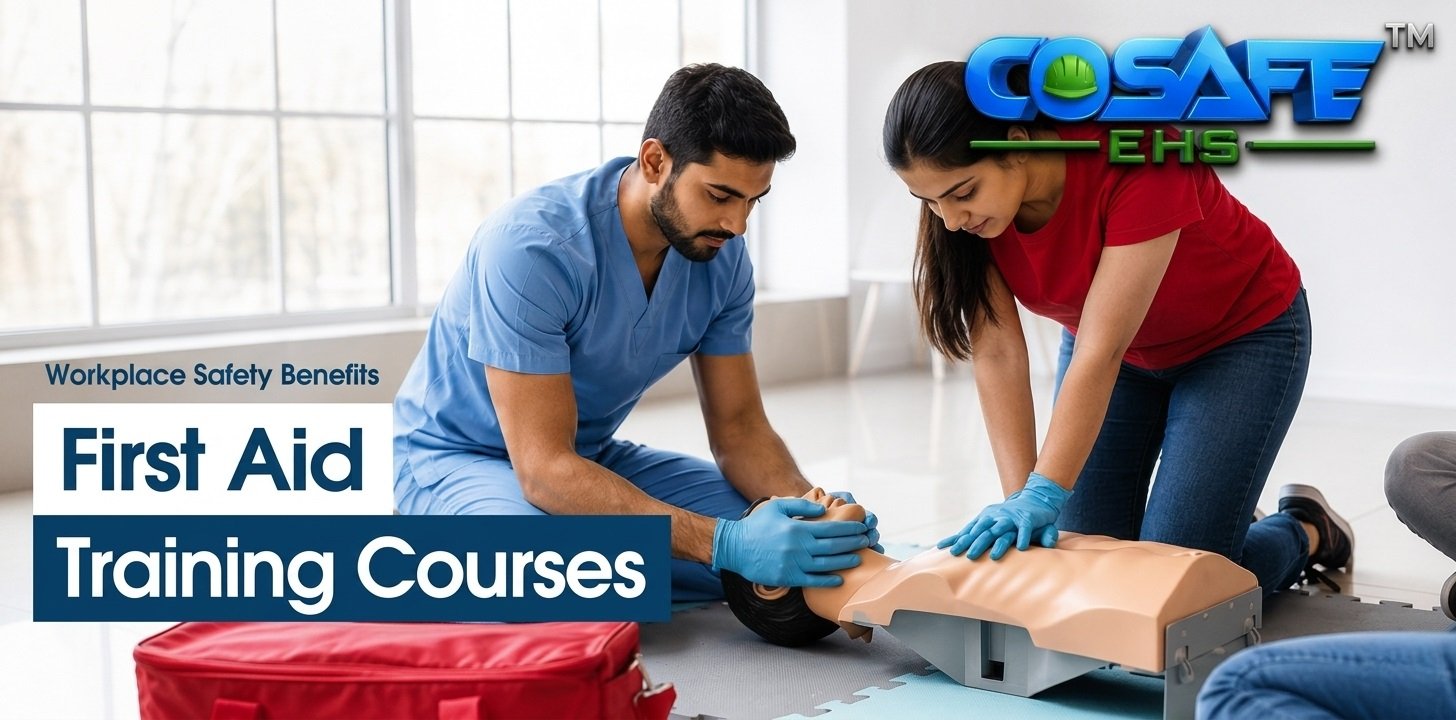
At Cosafe EHS Bangalore, our First Aid Training programs focus not only on theoretical understanding but also on practical hands-on learning through emergency simulations, mock drills, CPR practice sessions, casualty handling demonstrations, and real-world medical emergency scenarios.
Cosafe EHS First Aid Training programs are ideal for:
Manufacturing industries
Construction companies
Warehouses & logistics operations
IT & corporate offices
Hospitals & healthcare facilities
Educational institutions
Hotels & hospitality sector
Oil & gas industries
Facility management companies
Shopping malls & commercial establishments
Security & emergency response teams
Organizations with trained first aid responders can significantly reduce injury severity, improve emergency preparedness, strengthen compliance performance, and build safer workplaces. Modern workplace safety systems increasingly integrate first aid preparedness as a core component of occupational health and safety management.
Medical emergencies and workplace accidents can happen unexpectedly, but trained first aid responders can significantly reduce injury severity, stabilize casualties, and improve survival outcomes through immediate action and effective emergency response.
At Cosafe EHS Bangalore, our First Aid Training programs empower organizations and individuals with practical life-saving skills, emergency medical response knowledge, and workplace preparedness capabilities required to create safer and more resilient work environments.
Be Prepared to Save Lives. Strengthen Workplace Safety with Cosafe EHS Bangalore.
Training Modules
1. Introduction to First Aid & Emergency Response
This foundational module introduces participants to the principles of first aid and emergency medical response.
Topics covered include:
Importance of first aid in workplaces
Objectives of emergency medical response
Responsibilities of a first aider
Assessing emergency situations safely
Prioritizing casualties during emergencies
Legal and ethical considerations in first aid
Participants gain a clear understanding of how early intervention can reduce injury severity and save lives.
2. Primary Assessment & DRABC Procedure
A systematic casualty assessment is critical during emergencies.
This module includes:
Danger assessment
Response checking procedures
Airway management
Breathing assessment
Circulation evaluation
Recovery position techniques
Participants learn how to quickly assess casualties and provide immediate support in emergency situations.
3. CPR (Cardiopulmonary Resuscitation) Training
CPR is one of the most important life-saving skills during cardiac emergencies.
Training includes:
Adult CPR techniques
Child and infant CPR awareness
Hands-only CPR procedures
Chest compression techniques
Rescue breathing basics
Recovery position management
Introduction to AED (Automated External Defibrillator) awareness
Hands-on CPR practice sessions help participants build confidence during cardiac emergencies.
4. Bleeding Control & Wound Management
Uncontrolled bleeding can become life-threatening if not treated immediately.
Participants learn:
Types of bleeding and wounds
Bandaging and dressing techniques
Pressure application methods
Managing deep cuts and lacerations
Nosebleed management
Infection prevention practices
Practical demonstrations help improve casualty stabilization skills.
5. Fractures, Sprains & Injury Management
Workplace accidents often result in musculoskeletal injuries.
This module covers:
Identifying fractures and dislocations
Immobilization techniques
Sprain and strain management
Safe casualty movement awareness
Splinting basics
Emergency support for injured limbs
Participants learn how to minimize further injury before medical assistance arrives.
6. Burn Injury & Electrical Shock Response
Burns and electrical incidents are common workplace hazards in industrial and construction environments.
Training includes:
Thermal, electrical, and chemical burn management
Cooling and burn treatment procedures
Electrical shock emergency response
Safe isolation awareness
Preventing secondary injuries
Emergency escalation procedures
This module is especially valuable for manufacturing, maintenance, and electrical work environments.
7. Choking & Airway Obstruction Management
Airway obstruction emergencies require immediate action.
Participants are trained in:
Recognizing choking symptoms
Partial and complete airway obstruction response
Heimlich maneuver techniques
Choking management for adults and children
Airway clearance procedures
Post-emergency casualty monitoring
Hands-on practice improves confidence during choking emergencies.
8. Medical Emergency Response
This module prepares participants to respond to common workplace medical emergencies.
Topics include:
Heart attack awareness
Stroke recognition
Fainting and unconsciousness response
Seizure management
Diabetic emergencies
Heat stress and dehydration response
Shock management procedures
Participants learn how to stabilize casualties until professional medical support arrives.
9. Chemical Exposure & Poisoning Response
Chemical handling industries require specialized emergency preparedness.
Training includes:
Chemical exposure response procedures
Inhalation and skin exposure management
Poisoning awareness
Eye contamination emergency response
Decontamination basics
Emergency reporting procedures
Participants understand how to reduce risks during hazardous substance exposure incidents.
10. Workplace Accident Response & Casualty Handling
Industrial and workplace incidents often require immediate organized response.
Participants learn:
Casualty evacuation awareness
Safe lifting and movement techniques
Emergency transportation basics
Incident scene safety management
Multi-casualty emergency response awareness
Coordination with emergency medical services
This module improves workplace emergency preparedness and response coordination.
11. First Aid Kit Management & Workplace Preparedness
A properly maintained first aid system is essential for workplace safety.
Topics covered include:
Components of workplace first aid kits
Inspection and replenishment procedures
Emergency contact systems
First aid room awareness
Workplace medical preparedness planning
First aid documentation basics
Participants gain understanding of maintaining effective first aid readiness.
12. Mock Drills & Practical Emergency Simulations
Practical learning is one of the most important aspects of effective First Aid Training.
Activities include:
CPR practical sessions
Casualty rescue simulations
Bleeding control exercises
Workplace accident role plays
Emergency medical response drills
Team-based first aid scenarios
Emergency communication exercises
Mock drills improve reaction time, confidence, and emergency coordination capability.
Training Methodology
At Cosafe EHS Bangalore, we follow a highly practical, interactive, and industry-oriented training methodology designed to maximize knowledge retention, emergency response confidence, and real-world application. Our programs are delivered by experienced EHS professionals, emergency response trainers, and occupational safety experts with extensive practical field experience.
Interactive Classroom Sessions
Participants receive structured theoretical learning through:
- Visual presentations
- Real-life emergency case studies
- Accident investigation discussions
- Emergency medical response videos
- Interactive group discussions
- Workplace safety workshops
This helps participants clearly understand first aid concepts and emergency response priorities.
Hands-On Practical Demonstrations
Practical learning is the core of our First Aid Training programs.
Participants receive hands-on exposure to:
- CPR manikins and chest compression practice
- Bandaging and wound dressing techniques
- Splinting and immobilization procedures
- Casualty handling demonstrations
- Recovery position practice
- Choking rescue techniques
Hands-on exercises improve confidence, skill development, and emergency response readiness.
Scenario-Based Emergency Simulations
We conduct realistic emergency simulations based on workplace risks and accident scenarios.
Simulation activities include:
- Workplace injury response
- Cardiac arrest simulations
- Fall injury management
- Fire-related burn emergencies
- Electrical shock incidents
- Multi-casualty emergency response exercises
This practical approach improves reaction time, decision-making, and emergency preparedness.
Team-Based Learning & Emergency Coordination
Emergency response often requires teamwork and communication.
Our methodology includes:
- Group-based casualty response exercises
- Emergency communication drills
- Team coordination during emergencies
- Leadership during medical incidents
- Incident reporting awareness
- Collaborative emergency management activities
Participants learn how coordinated teamwork improves emergency response outcomes.
Mock Drills & Real-Time Emergency Exercises
Practical drills help organizations evaluate workforce readiness and first aid preparedness.
Training exercises include:
- CPR mock drills
- Workplace accident response simulations
- Emergency evacuation support exercises
- Medical emergency communication drills
- Casualty stabilization practice
- Rescue coordination exercises
Detailed feedback and corrective recommendations are provided after drills to improve organizational preparedness.
Assessment & Competency Evaluation
Participants are assessed through:
- Practical first aid demonstrations
- CPR performance evaluations
- Emergency response simulations
- Written assessments and quizzes
- Scenario-based participation reviews
- Interactive Q&A sessions
Certificates are issued upon successful completion of the training program.
Why Choose Cosafe EHS Bangalore for First Aid Training?
- Industry-focused practical first aid training
- Experienced EHS and emergency response trainers
- Hands-on CPR and casualty management practice
- Customized corporate first aid programs
- Realistic workplace emergency simulations
- On-site and classroom training options
- Compliance-focused occupational safety training
- Multi-industry expertise in workplace safety
- Strong emphasis on emergency preparedness and life-saving skills
Cosafe EHS Bangalore is committed to helping organizations build safer, more prepared, and emergency-ready workplaces through practical First Aid Training and professional EHS solutions.
Industries We Serve
Our First Aid Training programs are suitable for:
- Manufacturing Industries
- Construction & Infrastructure Projects
- Warehousing & Logistics Companies
- IT Companies & Corporate Offices
- Hospitals & Healthcare Facilities
- Oil & Gas Industries
- Educational Institutions
- Hotels & Hospitality Sector
- Facility Management Companies
- Retail & Commercial Buildings
- Engineering & Process Industries
Program Details
Duration: Half Day (3–4 Hours) / Full Day (5–6 Hours)
Certification: Certificate will be provided after successful completion
Validity: 1–2 Years
Languages: Kannada / Hindi / English / Telugu