






Overview
WorkPlace Safety Training Course in Bangalore
Workplace safety is one of the most critical aspects of modern industrial operations, corporate environments, construction projects, warehouses, manufacturing facilities, healthcare institutions, and commercial establishments. Unsafe working conditions can lead to accidents, injuries, operational disruptions, legal liabilities, productivity loss, and even fatalities. Organizations today are increasingly recognizing that a strong safety culture is not just a regulatory requirement — it is a strategic business necessity.
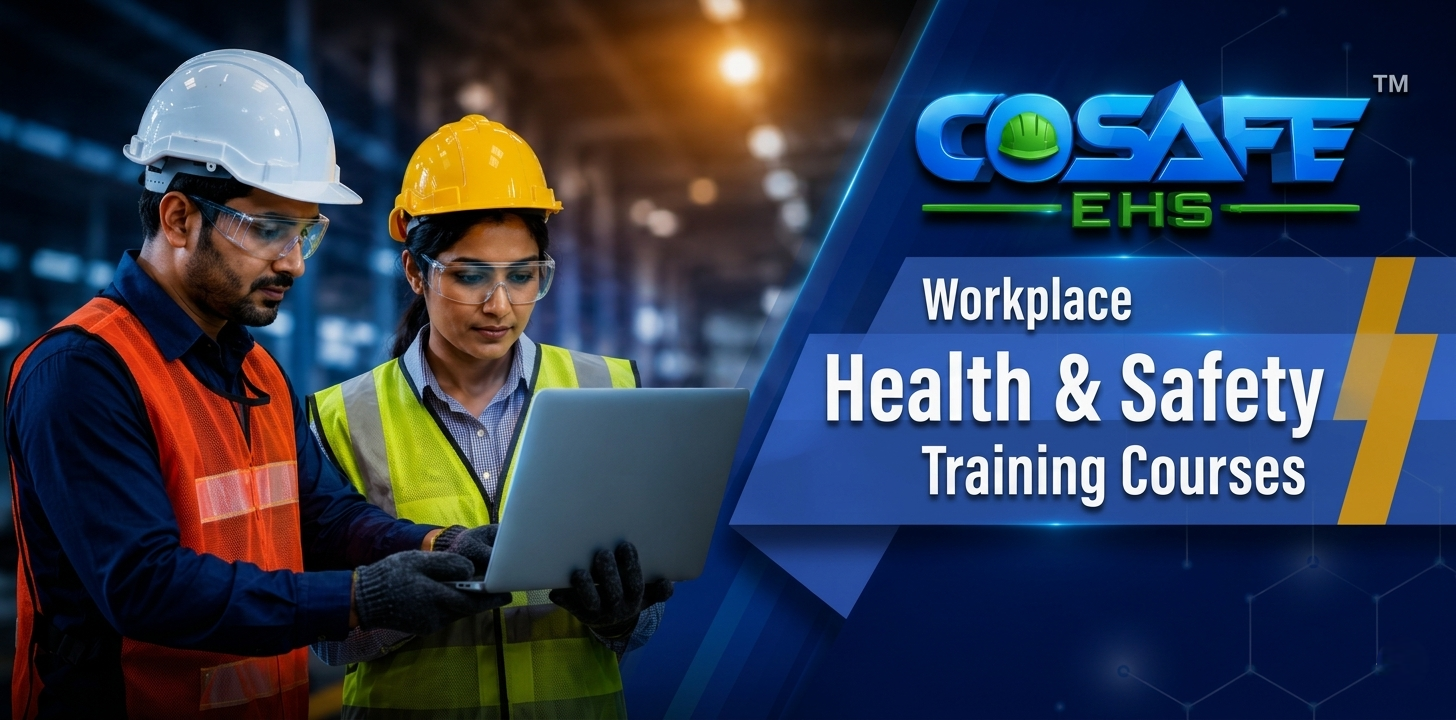
At Cosafe EHS Bangalore, we provide comprehensive Workplace Safety Training programs designed to help organizations create safer, compliant, and risk-aware work environments. Our training programs are industry-focused, practical, and aligned with occupational health and safety standards, helping companies minimize workplace incidents while improving operational efficiency and employee confidence.
Cosafe EHS Workplace Safety Training programs are developed for:
Manufacturing industries
Construction companies
Warehousing & logistics operations
IT & corporate offices
Healthcare facilities & hospitals
Oil & gas industries
Educational institutions
Retail & commercial facilities
Facility management companies
Industrial plants and process industries
With increasing awareness around occupational health and safety, organizations are investing heavily in professional EHS training programs to strengthen compliance, reduce accidents, and improve workforce preparedness. Industry discussions and safety training trends continue to highlight the growing demand for practical safety education and internationally aligned safety systems.
At Cosafe EHS Bangalore, our training philosophy focuses on practical implementation rather than theoretical learning alone. We help organizations build proactive safety cultures through hazard identification, risk assessment, emergency preparedness, behavioral safety awareness, and hands-on training exercises.
Our workplace safety training programs are structured to improve:
Employee safety awareness
Hazard identification capability
Emergency response readiness
Regulatory compliance
Risk reduction strategies
Incident prevention culture
Safe work practices
Operational continuity
Organizations with strong workplace safety systems experience lower accident rates, reduced downtime, improved employee morale, stronger compliance performance, and enhanced corporate reputation. Safety is no longer viewed only as compliance — it is a core component of sustainable business growth.
Workplace safety training is one of the most effective investments an organization can make to protect employees, improve productivity, and ensure regulatory compliance. A trained workforce is more aware, better prepared, and capable of preventing workplace incidents before they occur.
At Cosafe EHS Bangalore, our Workplace Safety Training programs empower organizations with practical safety knowledge, hazard awareness, emergency preparedness skills, and industry-relevant safety solutions required to create safer and more resilient workplaces.
Training Modules
1. Introduction to Workplace Safety
This foundational module provides participants with a complete understanding of workplace safety principles and occupational health responsibilities.
Topics covered include:
-
Importance of workplace safety
-
Roles and responsibilities of employers and employees
-
Safety culture development
-
Occupational health and safety fundamentals
-
Legal compliance awareness
- Workplace safety regulations and standards
Participants gain a strong understanding of why safety is essential for organizational success and employee well-being.
2. Hazard Identification & Risk Assessment (HIRA)
Hazard identification is one of the most important elements of accident prevention.
This module includes:
-
Types of workplace hazards
-
Physical, chemical, biological, ergonomic, and electrical hazards
-
Risk assessment techniques
-
Hazard control hierarchy
-
Safe work planning
-
Job Safety Analysis (JSA) awareness
Participants learn how to identify unsafe conditions before incidents occur and implement effective control measures.
3. Fire Safety & Emergency Preparedness
Fire incidents remain one of the leading workplace risks across industries.
This module covers:
-
Basics of fire science
-
Classes of fire
-
Fire prevention techniques
-
Fire extinguisher usage
-
Emergency evacuation procedures
-
Emergency response coordination
-
Fire drill awareness
Hands-on practical sessions help participants confidently respond during emergencies.
4. Personal Protective Equipment (PPE) Safety
Proper use of PPE significantly reduces workplace injuries.
Training includes:
-
Types of PPE and their applications
-
Selection of appropriate PPE
-
Inspection and maintenance procedures
-
Respiratory protection awareness
-
Head, eye, hand, and foot protection
- PPE compliance and behavioral safety
Participants understand how proper PPE usage improves workplace protection and reduces exposure risks.
5. Electrical Safety Awareness
Electrical hazards can cause severe injuries, fires, and fatalities if not managed properly.
Topics include:
-
Electrical hazard identification
-
Shock and arc flash awareness
-
Safe handling of electrical equipment
-
Lockout/Tagout (LOTO) awareness
-
Safe isolation procedures
- Preventive maintenance safety practices
This module is especially valuable for industrial, maintenance, and construction environments.
6. Work at Height Safety
Falls from height are among the most common causes of workplace fatalities.
Participants learn:
-
Fall hazard identification
-
Ladder safety practices
-
Scaffold safety awareness
-
Fall arrest systems and anchorage
-
Safety harness inspection and usage
-
Rescue planning for height emergencies
Practical demonstrations improve safe working behavior in elevated work environments.
7. Manual Handling & Ergonomic Safety
Improper lifting techniques and poor ergonomics can lead to long-term injuries and musculoskeletal disorders.
Training includes:
Correct lifting and carrying techniques
Workplace ergonomic awareness
Posture improvement practices
Material handling safety
Repetitive strain injury prevention
Office and industrial ergonomic controls
This module improves employee well-being and reduces workplace fatigue and injuries.
8. Chemical Safety & Hazard Communication
Industries handling chemicals require specialized workplace safety awareness.
Topics covered:
Chemical hazard identification
Material Safety Data Sheet (MSDS) awareness
Safe chemical storage and handling
Spill response basics
Hazard communication symbols and labels
Emergency exposure response procedures
Participants gain practical knowledge for safely handling hazardous substances.
9. Incident Reporting & Accident Investigation
Accurate reporting and investigation help prevent repeat incidents.
This module includes:
Near-miss reporting
Incident investigation techniques
Root cause analysis
Corrective and preventive actions
Safety documentation practices
Workplace safety reporting systems
Participants learn how to strengthen organizational safety systems through proper incident management.
10. First Aid & Emergency Medical Response
Immediate response during workplace medical emergencies can save lives.
Training includes:
Basic first aid awareness
CPR and emergency response basics
Bleeding and burn management
Fracture and injury handling
Medical emergency communication
Casualty movement awareness
Practical response techniques improve emergency preparedness across workplaces.
11. Behavioral Safety & Safety Culture Development
Human behavior is one of the biggest contributors to workplace incidents.
Participants are trained in:
Unsafe act identification
Positive safety behavior reinforcement
Safety leadership awareness
Communication during high-risk tasks
Team-based safety accountability
Building proactive safety culture
This module helps organizations create long-term behavioral safety improvements.
12. Mock Drills & Practical Simulations
Practical exercises are essential for effective learning and emergency readiness.
Activities include:
Emergency evacuation drills
Fire response simulations
PPE practical demonstrations
Hazard identification exercises
Team-based emergency response scenarios
Workplace inspection simulations
Hands-on activities help participants apply safety concepts confidently in real workplace situations.
Training Methodology
At Cosafe EHS Bangalore, we follow a highly practical, industry-oriented, and interactive training methodology designed to maximize workforce engagement, knowledge retention, and real-world application. Our training programs are delivered by experienced EHS professionals with extensive industrial and operational safety expertise.
Interactive Classroom Training
Participants receive structured theoretical training using:
- Visual presentations
- Safety videos and animations
- Industrial case studies
- Real-world accident analysis
- Group discussions and safety workshops
This helps employees understand workplace hazards and preventive strategies clearly.
Practical Hands-On Demonstrations
Our training emphasizes practical implementation through:
- PPE demonstrations
- Fire extinguisher handling
- Hazard identification exercises
- Emergency equipment demonstrations
- Safe work practice simulations
Practical learning significantly improves employee confidence and retention.
Scenario-Based Safety Simulations
Realistic workplace scenarios are created to help participants develop emergency decision-making and response capability.
Simulation exercises include:
- Fire emergency response
- Chemical spill awareness
- Unsafe condition identification
- Emergency evacuation coordination
- Accident response simulations
This approach improves preparedness and critical thinking during emergencies.
Team-Based Learning Activities
Safety is a collective responsibility.
Our methodology includes:
- Team coordination exercises
- Safety communication activities
- Behavioral safety discussions
- Leadership and accountability training
- Group-based hazard assessment activities
Participants learn how teamwork improves workplace safety performance.
Mock Drills & Emergency Exercises
Practical drills help organizations evaluate emergency preparedness and response efficiency.
Training drills include:
- Fire evacuation drills
- Incident response exercises
- Emergency communication practices
- Rescue awareness demonstrations
- Workplace inspection activities
These exercises strengthen emergency readiness and operational response capability.
Assessment & Competency Evaluation
Participants are assessed through:
- Practical safety demonstrations
- Written evaluations
- Hazard identification exercises
- Emergency response performance
- Interactive feedback sessions
Certificates are issued upon successful completion of the training program.
Why Choose Cosafe EHS Bangalore for Workplace Safety Training?
- Industry-focused practical safety training
- Experienced EHS and industrial safety trainers
- Customized corporate safety programs
- On-site and classroom training options
- Real-time practical demonstrations
- Regulatory compliance-focused training
- Hands-on emergency response exercises
- Multi-industry expertise
- Strong focus on behavioral safety and risk reduction
Cosafe EHS Bangalore is committed to helping organizations build safer, smarter, and fully compliant workplaces through practical EHS education and professional workplace safety solutions.
Industries We Serve
Our Workplace Safety Training programs are suitable for:
- Manufacturing Industries
- Construction & Infrastructure Projects
- Warehousing & Logistics Companies
- Corporate Offices & IT Parks
- Hospitals & Healthcare Facilities
- Oil & Gas Industries
- Educational Institutions
- Facility Management Companies
- Retail & Commercial Buildings
- Engineering & Process Industries
Program Details
Duration: Half Day (3–4 Hours) / Full Day (5–6 Hours)
Certification: Certificate will be provided after successful completion
Validity: 1–2 Years
Languages: Kannada / Hindi / English / Telugu