






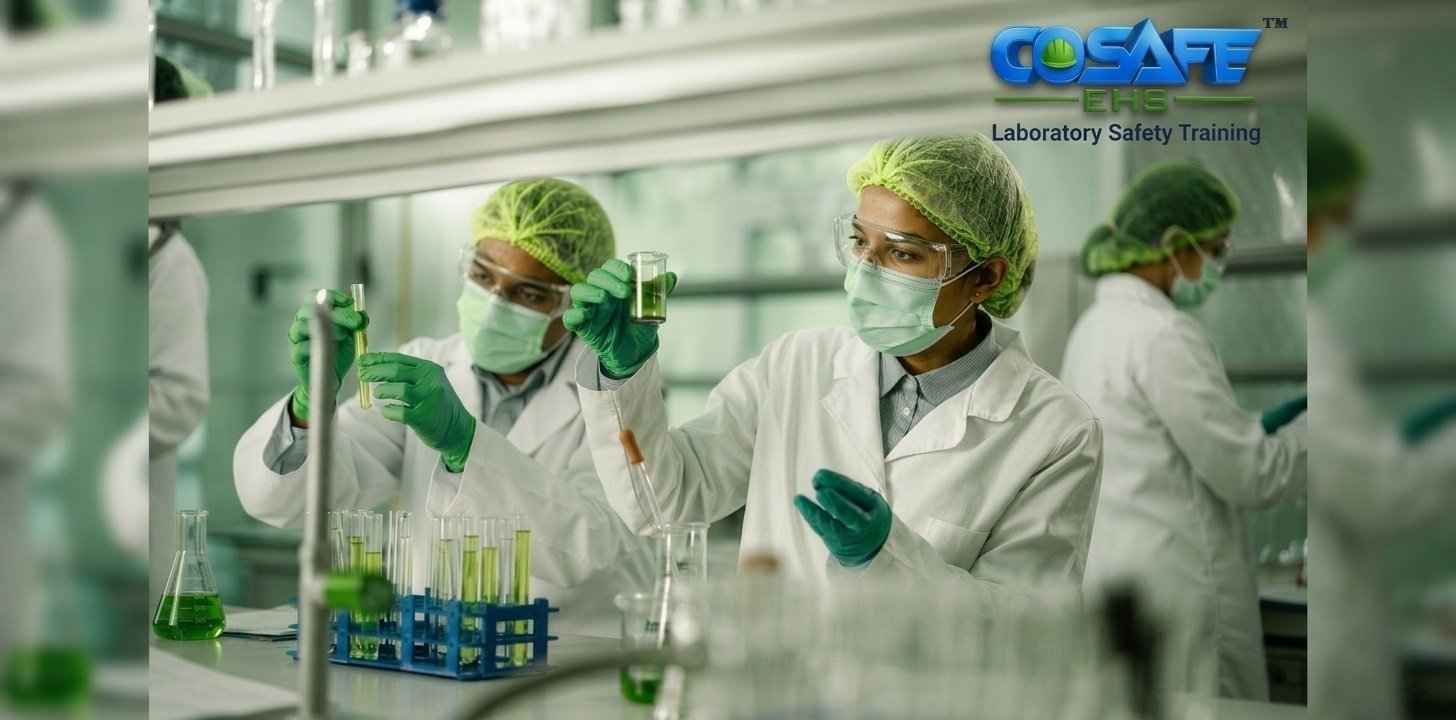
Overview
Laboratory Safety Training in Bangalore
Laboratories are high-risk working environments where employees regularly interact with hazardous chemicals, biological agents, compressed gases, electrical equipment, glassware, heat-generating devices, radioactive materials, sharp instruments, and sensitive testing equipment. Whether in pharmaceutical companies, healthcare facilities, research centers, educational institutions, chemical industries, food testing labs, biotechnology facilities, environmental laboratories, or industrial quality-control units, laboratory operations require strict adherence to safety procedures to prevent accidents, contamination, exposure incidents, fires, explosions, equipment damage, and occupational illnesses.
At Cosafe EHS Bangalore, we provide comprehensive and industry-focused Laboratory Safety Training programs designed to help organizations, laboratory personnel, researchers, technicians, supervisors, students, and safety professionals safely manage laboratory operations while complying with occupational health, industrial hygiene, and workplace safety standards. (cosafe.in)
Laboratory incidents can occur due to improper chemical handling, unsafe storage practices, inadequate ventilation, incorrect use of laboratory equipment, poor housekeeping, lack of emergency preparedness, contamination, and insufficient worker awareness. Safety investigations consistently show that many laboratory accidents are preventable through structured safety training, proper supervision, hazard communication, and strict operational discipline. Effective laboratory safety training significantly reduces workplace incidents, improves compliance, and strengthens operational reliability. (osha.gov)
Modern laboratories involve complex activities such as chemical testing, biological analysis, sample preparation, equipment calibration, sterilization processes, and hazardous material handling. Employees must understand how to identify hazards, use laboratory equipment safely, wear appropriate personal protective equipment (PPE), respond to emergencies, and follow safe operating procedures to maintain a safe and compliant work environment.
At Cosafe EHS Bangalore, our Laboratory Safety Training programs combine theoretical learning, practical demonstrations, hazard identification exercises, chemical safety awareness, emergency response preparedness, contamination prevention techniques, PPE usage training, and real-world laboratory safety simulations to help organizations create safer and more efficient laboratory environments. (cosafe.in)
Cosafe EHS Laboratory Safety Training programs are ideal for:
Pharmaceutical laboratories
Chemical testing laboratories
Biotechnology and research facilities
Hospitals and healthcare laboratories
Educational and academic institutions
Food and beverage testing laboratories
Environmental testing facilities
Industrial quality-control laboratories
Research and development centers
Diagnostic laboratories
Laboratory supervisors and technicians
EHS and safety professionals
Organizations that invest in structured Laboratory Safety Training programs improve workforce competency, reduce workplace incidents, strengthen contamination control, improve compliance performance, and enhance operational safety culture.
Laboratory environments involve complex hazards that can lead to chemical exposure, contamination, fire incidents, operational disruption, and occupational illnesses if not properly managed. Organizations that invest in structured Laboratory Safety Training improve workforce awareness, strengthen operational discipline, reduce workplace incidents, and create safer and more compliant laboratory environments.
At Cosafe EHS Bangalore, our Laboratory Safety Training programs empower organizations and laboratory personnel with practical hazard management knowledge, chemical safety awareness, contamination control practices, emergency preparedness capability, and operational safety skills required to safely manage laboratory operations in modern industrial and research environments. (cosafe.in)
Prevent Laboratory Hazards. Improve Operational Safety. Build Safer Laboratory Environments with Cosafe EHS Bangalore
Training Modules
1. Introduction to Laboratory Safety
This foundational module introduces participants to laboratory hazards, safety responsibilities, and workplace risk awareness.
Topics covered include:
Importance of laboratory safety
Common laboratory accidents and incident causes
Types of laboratory hazards
Roles and responsibilities of laboratory personnel
Safe laboratory work culture
Importance of compliance and documentation
Participants gain awareness of how unsafe laboratory practices can result in severe injuries, contamination, operational disruption, and health hazards.
2. Laboratory Hazard Identification & Risk Assessment
Hazard identification is essential for maintaining a safe laboratory environment.
This module includes:
Chemical hazards
Biological hazards
Physical and ergonomic hazards
Electrical and fire hazards
Hazard assessment procedures
Risk control and mitigation measures
Participants learn proactive methods to identify and minimize laboratory risks before work begins.
3. Chemical Safety & Hazard Communication
Laboratories often involve hazardous chemicals that require strict handling procedures.
Training includes:
Chemical labeling awareness
Understanding Safety Data Sheets (SDS/MSDS)
Chemical compatibility and segregation basics
Safe handling and transfer procedures
Exposure prevention measures
Safe storage and disposal awareness
Participants improve awareness of chemical hazards and safe operational practices.
4. Biological Safety Awareness
Biological materials can create contamination and exposure risks in laboratories.
Topics covered:
Biological hazard awareness
Infection control principles
Safe specimen handling practices
Contamination prevention measures
Biohazard labeling awareness
Laboratory hygiene requirements
This module strengthens awareness of biological safety and contamination control.
5. Personal Protective Equipment (PPE) for Laboratory Safety
Appropriate PPE is critical for protecting laboratory personnel from exposure hazards.
Participants are trained in:
Laboratory coat and protective clothing awareness
Gloves selection and usage
Eye and face protection
Respiratory protection basics
PPE inspection and maintenance
Limitations of PPE systems
Industry safety experts consistently emphasize that proper PPE usage significantly reduces laboratory exposure risks. (osha.gov)
6. Safe Use of Laboratory Equipment
Improper use of laboratory instruments and devices can lead to accidents and operational hazards.
Training includes:
Safe handling of laboratory instruments
Glassware safety awareness
Centrifuge and heating equipment safety
Compressed gas cylinder handling basics
Electrical equipment safety awareness
Equipment inspection and reporting practices
Participants improve operational discipline and equipment safety awareness.
7. Fire Safety & Emergency Response in Laboratories
Laboratories contain flammable substances and ignition sources that increase fire risks.
Topics include:
Laboratory fire hazards
Classes of fire and extinguishing basics
Fire extinguisher awareness
Emergency shutdown procedures
Evacuation and emergency communication
Spill and fire response coordination
Preparedness improves laboratory resilience and emergency response capability.
8. Chemical Spill & Exposure Response
Chemical spills can quickly escalate into serious laboratory emergencies.
Participants learn:
Spill identification and classification
Spill containment basics
Emergency isolation procedures
Spill kit awareness
Exposure response procedures
Reporting and incident management basics
This module improves emergency preparedness and operational safety awareness.
9. Laboratory Housekeeping & Waste Management
Poor housekeeping practices increase accident and contamination risks.
Training includes:
Laboratory cleanliness standards
Safe disposal of hazardous waste
Chemical waste segregation awareness
Sharps disposal procedures
Housekeeping inspection practices
Prevention of contamination and clutter hazards
Participants learn how proper housekeeping improves laboratory safety and operational efficiency.
10. Ergonomics & Occupational Health in Laboratories
Laboratory personnel often perform repetitive tasks that can lead to ergonomic injuries and fatigue.
Topics covered:
Ergonomic risk awareness
Safe workstation setup
Posture and repetitive strain prevention
Fatigue management basics
Safe lifting and material handling awareness
Occupational health considerations
This module strengthens workplace wellness and operational productivity.
11. Emergency Preparedness & Incident Reporting
Every laboratory must have clear emergency procedures and reporting systems.
Participants learn:
Emergency response planning awareness
Incident and near-miss reporting
Evacuation procedures
First aid awareness in laboratory environments
Communication during emergencies
Coordination with emergency responders
Preparedness improves workplace resilience and operational safety management.
12. Legal Compliance & Laboratory Safety Standards
Laboratories must comply with workplace safety regulations and operational standards.
Training includes:
Laboratory safety compliance awareness
Inspection and audit basics
Documentation and record-keeping awareness
Safety signage and labeling requirements
Employee and supervisor accountability
Industry best practices for laboratory safety management
This module improves compliance awareness and operational accountability.
13. Practical Demonstrations & Mock Drills
Practical learning is one of the most important components of effective Laboratory Safety Training.
Activities include:
PPE usage demonstrations
Chemical handling awareness exercises
Spill response simulations
Laboratory equipment safety demonstrations
Hazard identification activities
Emergency evacuation drills
Fire extinguisher awareness practice
Hands-on practical exercises improve participant confidence, laboratory readiness, and operational safety competency.
Training Methodology
At Cosafe EHS Bangalore, we follow a highly practical, interactive, and industry-oriented training methodology designed to improve laboratory hazard awareness, operational competency, emergency preparedness, and workplace compliance performance. Our programs are delivered by experienced EHS professionals, laboratory safety trainers, industrial hygiene experts, and occupational health specialists with extensive industry experience. (cosafe.in)
Interactive Classroom Sessions
Participants receive structured theoretical learning through:
- Visual presentations
- Laboratory accident case studies
- Hazard awareness workshops
- Compliance-focused learning sessions
- Group discussions and industrial examples
- Interactive safety participation activities
This helps participants clearly understand laboratory hazards, operational risks, and preventive safety measures.
Practical Laboratory Safety Demonstrations
Practical learning is a core component of our Laboratory Safety Training methodology.
Participants receive demonstrations on:
- PPE inspection and usage
- Safe chemical handling procedures
- Laboratory equipment safety awareness
- Spill response techniques
- Waste segregation practices
- Emergency response procedures
Hands-on demonstrations improve participant confidence and laboratory operational readiness.
Scenario-Based Safety Simulations
We conduct realistic simulations based on actual laboratory hazards and operational challenges.
- Simulation activities include:
- Chemical spill response exercises
- Fire emergency awareness scenarios
- Exposure incident simulations
- Hazard identification exercises
- Unsafe condition reporting activities
- Emergency evacuation drills
This practical approach improves hazard recognition, teamwork, and operational decision-making capability.
Team-Based Safety Coordination Exercises
Laboratory safety requires strong communication, coordination, and operational discipline.
Our methodology includes:
- Group risk assessment activities
- Safety communication workshops
- Emergency coordination simulations
- Incident reporting exercises
- Leadership and accountability discussions
- Laboratory inspection activities
Participants learn how collaborative safety practices improve laboratory operational safety performance.
Mock Drills & Real-Time Operational Practice
Practical mock drills are conducted to strengthen emergency preparedness and operational awareness.
Exercises include:
- Spill response drills
- Emergency evacuation exercises
- Fire response awareness activities
- PPE emergency usage demonstrations
- Incident reporting simulations
- Laboratory safety inspection exercises
Detailed feedback sessions help participants improve workplace application capability and operational safety performance.
Assessment & Competency Evaluation
Participants are evaluated through:
- Practical safety demonstrations
- Hazard identification exercises
- Spill response participation
- Written assessments and quizzes
- Scenario-based evaluations
- Interactive Q&A sessions
Certificates are issued upon successful completion of the training program.
Why Choose Cosafe EHS Bangalore for Laboratory Safety Training?
- Industry-focused practical laboratory safety training
- Experienced laboratory safety and EHS trainers
- Realistic spill response and emergency simulations
- Hands-on PPE and hazard management demonstrations
- Customized programs based on laboratory risk profiles
- Strong emphasis on contamination prevention and compliance
- Multi-industry expertise in workplace safety management
- On-site and classroom training options
- Interactive and scenario-based learning methodology
Cosafe EHS Bangalore is committed to helping organizations reduce laboratory incidents, improve operational safety performance, strengthen workforce competency, and create safer laboratory environments through professional Laboratory Safety Training solutions. (cosafe.in)
Industries We Serve
Our Laboratory Safety Training programs are suitable for:
- Pharmaceutical Laboratories
- Biotechnology & Research Facilities
- Healthcare & Diagnostic Laboratories
- Educational Institutions & Universities
- Chemical Testing Laboratories
- Food & Beverage Testing Facilities
- Environmental Laboratories
- Industrial Quality-Control Units
- Research & Development Centers
- Healthcare & Hospital Laboratories
Program Details
Duration: Half Day (3–4 Hours) / Full Day (5–6 Hours)
Certification: Certificate provided upon successful completion
Validity: 1–2 Years
Languages: Kannada / Hindi / English / Telugu